
Be There
Blog
The Ultimate Event Management Checklist Sample (2025 Guide)
By BeThere
Nov 3, 2025 • 21 min read
Share this post


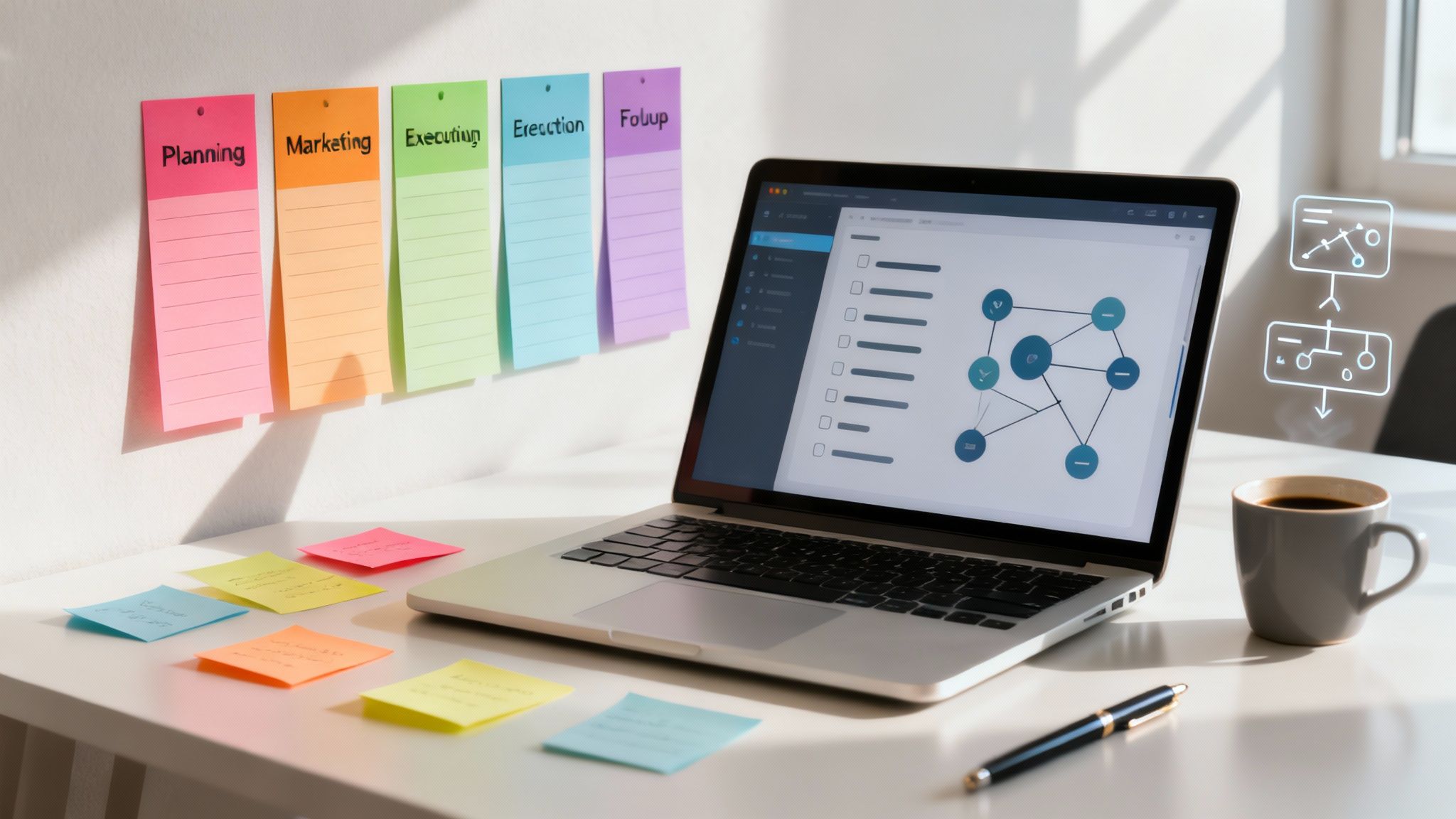
Planning a memorable event, whether it's a critical product launch or an annual company retreat, involves juggling hundreds of moving parts. Without a structured plan, crucial details can slip through the cracks, leading to budget overruns, logistical nightmares, and a less-than-perfect attendee experience. The secret to flawless execution isn't magic; it's a meticulous checklist.
This guide provides a comprehensive event management checklist sample for ten different event types, from corporate team-building to virtual conferences. We will analyze each template, offering strategic insights and actionable takeaways you can apply immediately. For companies that use both Slack and Google Calendar internally, managing these details can be incredibly handy with a tool like Be There. It streamlines event coordination directly within your existing workflow, from sending invites to tracking attendance without leaving your favorite apps.
Whether you're organizing a small workshop or a large-scale festival, a solid checklist acts as your roadmap, ensuring every task is accounted for. For instance, to illustrate the practical application of such a tool, you can explore a comprehensive birthday party planning checklist that offers step-by-step guidance. Our goal is to give you a replicable framework to ensure your next event is a resounding success. Let's dive into the samples.
1. The Master Plan: Conference & Convention Planning Checklist
For large-scale professional events like conferences, conventions, and symposiums, a high-level overview is not enough. You need a master plan, a comprehensive event management checklist sample that details every phase from initial concept to post-event analysis. This type of checklist breaks down the enormous task of managing an event for 50+ attendees into a structured, manageable workflow. It ensures nothing is overlooked, from securing a venue 12 months in advance to coordinating speaker travel, managing multi-track session schedules, and setting up complex registration systems.
✦Why It Works
This checklist is the gold standard for a reason. Major events like the TED Conference and Microsoft Ignite rely on intricate, multi-layered checklists to manage hundreds of moving parts seamlessly. They prove that meticulous, long-term planning prevents last-minute chaos and elevates the attendee experience.
Strategic Insight: The core principle is delegation and accountability. By assigning every single task to a team member with a firm deadline, you create a system of ownership that is easy to track and manage.
✦Actionable Takeaways
- Start Early: Begin planning at least 12 months out.
- Assign Ownership: Use a project management tool like Asana to assign tasks and deadlines.
- Buffer Time: Build a 10-15% buffer into your timeline for unexpected delays.
- Rehearse: Conduct a full team run-through one week before the event to identify and fix potential issues.
2. Wedding Planning Checklist
A wedding is one of the most personal and emotionally significant events one can plan. A detailed wedding planning checklist is an indispensable tool for managing the countless moving parts, from initial budgeting to post-honeymoon thank-you cards. This event management checklist sample breaks down a 12 to 18-month timeline into manageable phases, covering vendor coordination, guest management, ceremony logistics, and reception planning. It ensures every detail, from booking the venue to finalizing the seating chart, is tracked and completed on time.

✦Why It Works
This checklist model has been perfected by industry giants like The Knot and WeddingWire, platforms used by millions of couples to navigate the complexities of wedding planning. These tools prove that a systematic, timeline-based approach transforms a potentially overwhelming experience into a structured and enjoyable journey. They turn abstract dreams into concrete, actionable steps.
Strategic Insight: The key is personalization within a rigid framework. While the timeline provides structure, the checklist must be flexible enough to accommodate unique cultural traditions, personal preferences, and unexpected changes, making it a living document rather than a static list.
✦Actionable Takeaways
- Book Major Vendors First: Secure your venue and photographer 12-18 months in advance, as they set the date and tone.
- Use a Shared Digital Tool: A shared digital checklist allows couples and planners to track progress collaboratively in real time.
- Vendor Sub-Checklists: Create a separate, detailed checklist for each vendor (caterer, florist, DJ) to manage contracts, payments, and day-of needs.
- Schedule a Day-Of Timeline: Create a minute-by-minute schedule for the wedding day and distribute it to all vendors, the wedding party, and key family members.
3. Corporate Event & Team Building Checklist
For internal company events, from team-building retreats to product launches, a specialized checklist is crucial. This template moves beyond general logistics to focus on aligning the event with company culture, managing internal approvals, coordinating with different departments, and ultimately, measuring the impact on employee morale and business goals. This type of event management checklist sample is essential for HR departments and corporate planners tasked with creating engaging experiences that resonate with their teams, whether in-person, hybrid, or fully remote.
✦Why It Works
Companies like Google and Salesforce use meticulously structured checklists for their internal events, like quarterly all-hands and employee experiences at Dreamforce, to foster a strong corporate culture. They demonstrate that a well-planned internal event is more than just a day off; it’s a strategic investment in employee engagement and retention. This approach ensures every detail, from inclusive activities to post-event feedback, serves a clear purpose. For virtual-only events, following established virtual event best practices is key to success.
Strategic Insight: The focus is on objectives and ROI. Before planning any logistics, define the event's goal: Is it to boost morale, facilitate cross-departmental networking, or celebrate a milestone? Every decision should support this primary objective.
✦Actionable Takeaways
- Set Clear Objectives: Define whether the goal is networking, learning, or team bonding before you begin.
- Survey Employees: Ask your team for input on activities and preferences months in advance to boost buy-in.
- Integrate Your Tools: For companies using Slack and Google Calendar, tools like Be There are very useful for managing event RSVPs and syncing schedules directly within your existing workflow, streamlining coordination.
- Gather Immediate Feedback: Send out a feedback survey right after the event concludes to capture fresh, honest insights for future planning. Learn more about organizing impactful corporate team-building events.
4. Virtual & Hybrid Event Checklist
The shift to remote and flexible work has made the virtual and hybrid event checklist indispensable. This modern template specifically addresses the unique technological and logistical challenges of hosting events online, or simultaneously for both in-person and remote audiences. It covers critical areas like selecting the right streaming platform, conducting technical rehearsals, managing digital engagement, and ensuring a seamless experience for all attendees, regardless of their location. This event management checklist sample is vital for any organization offering flexible attendance.
✦Why It Works
This checklist's power lies in its focus on technology and engagement. Events like Adobe MAX and HubSpot's INBOUND have successfully scaled to massive global audiences by meticulously planning their virtual components. They demonstrate that a well-executed hybrid event isn't just a live stream; it's a fully integrated experience that requires its own dedicated planning track. For companies using Slack and Google Calendar, a tool like Be There is very handy, as it simplifies this by centralizing event creation and notifications directly within existing workflows to boost participation.
Strategic Insight: The key is to treat the virtual audience as first-class participants, not passive observers. This means creating dedicated engagement opportunities, providing robust technical support, and ensuring high-quality audio and video production.
✦Actionable Takeaways
- Tech Rehearsal: Conduct a full technical run-through with speakers and moderators 48-72 hours before the event.
- Provide Support: Distribute a troubleshooting guide and clear contact information for a dedicated tech support team.
- Boost Engagement: Use platform features like polls, Q&A sessions, and virtual breakout rooms to keep the online audience involved.
- Record Everything: Record all sessions (with permission) and make them available on-demand for different time zones. Explore further tips on how to plan virtual events.
5. Trade Show & Exhibition Booth Checklist
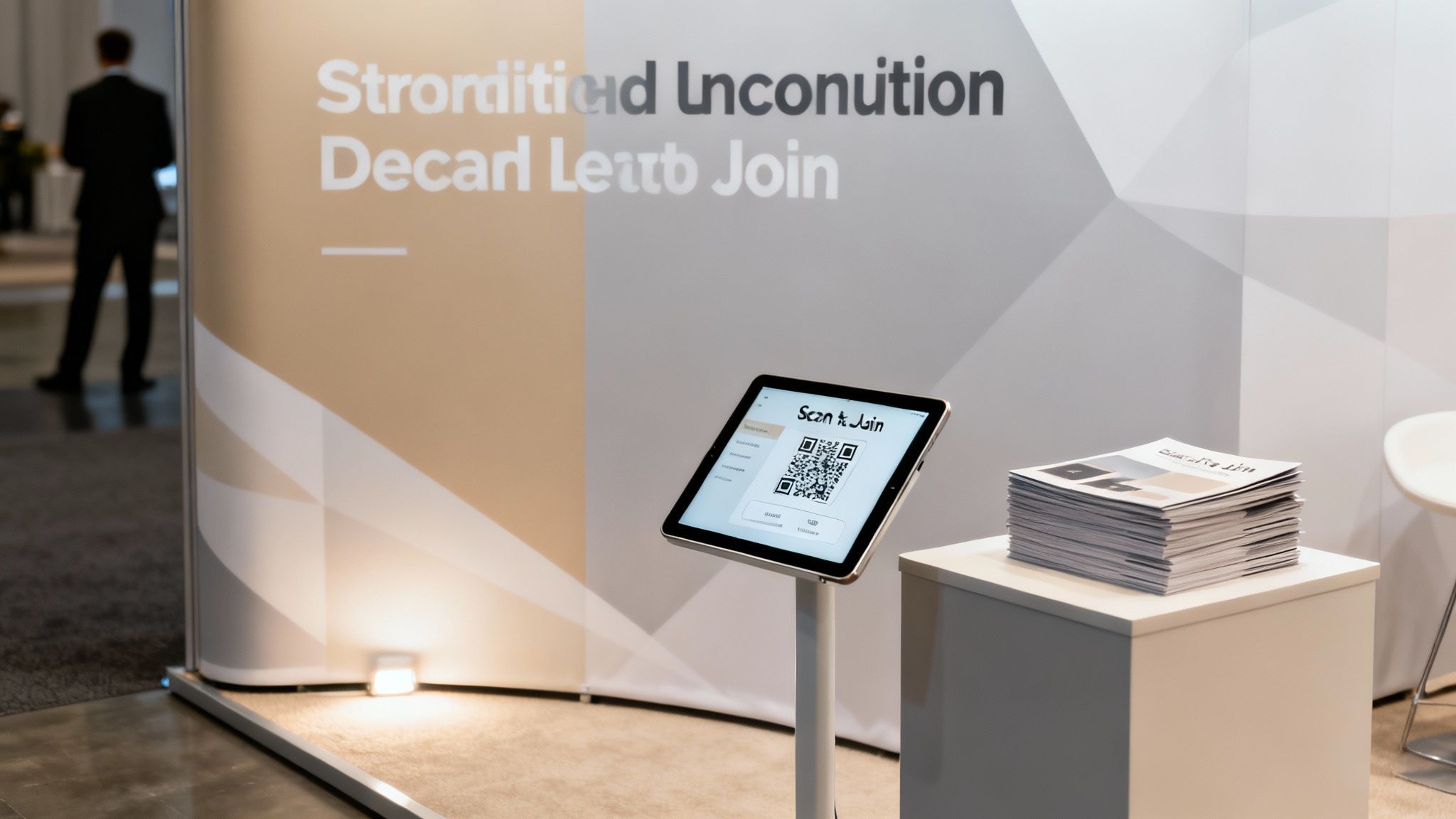
For exhibitors, a trade show is a high-stakes environment where every detail matters. This specialized event management checklist sample is designed for booth managers and marketing teams participating in expos, exhibitions, and trade shows. It moves beyond general event planning to focus on the unique elements of managing a booth: design logistics, technology setup, staffing schedules, inventory management, lead capture systems, and crucial post-show follow-up. This template ensures your presence is not just seen but is also effective at generating leads and ROI.
✦Why It Works
Massive industry events like CES (Consumer Electronics Show) or SXSW feature thousands of exhibitors, all vying for attention. The most successful ones, from global brands to innovative startups, operate from a meticulous checklist. They meticulously plan everything from booth layout for optimal traffic flow to training staff on qualifying questions, proving that a structured approach is essential to stand out and capture valuable leads in a crowded space.
Strategic Insight: The goal is to create a seamless brand experience that drives lead generation. A booth checklist transforms a potentially chaotic effort into a well-oiled machine, ensuring that every staff interaction, product demo, and conversation is purposeful and tracked.
✦Actionable Takeaways
- Book Early: Reserve your booth space 6-12 months in advance for the best location.
- Design for Impact: Create an eye-catching booth design that is also functional for demos and conversations.
- Train Your Team: Ensure all staff are experts on product knowledge and trained to qualify leads effectively.
- Modernize Lead Capture: Use QR codes and mobile apps for quick, accurate lead information collection.
- Follow Up Fast: Plan and execute your lead follow-up email campaigns within 48 hours of the event's conclusion.
6. Festival & Entertainment Event Checklist
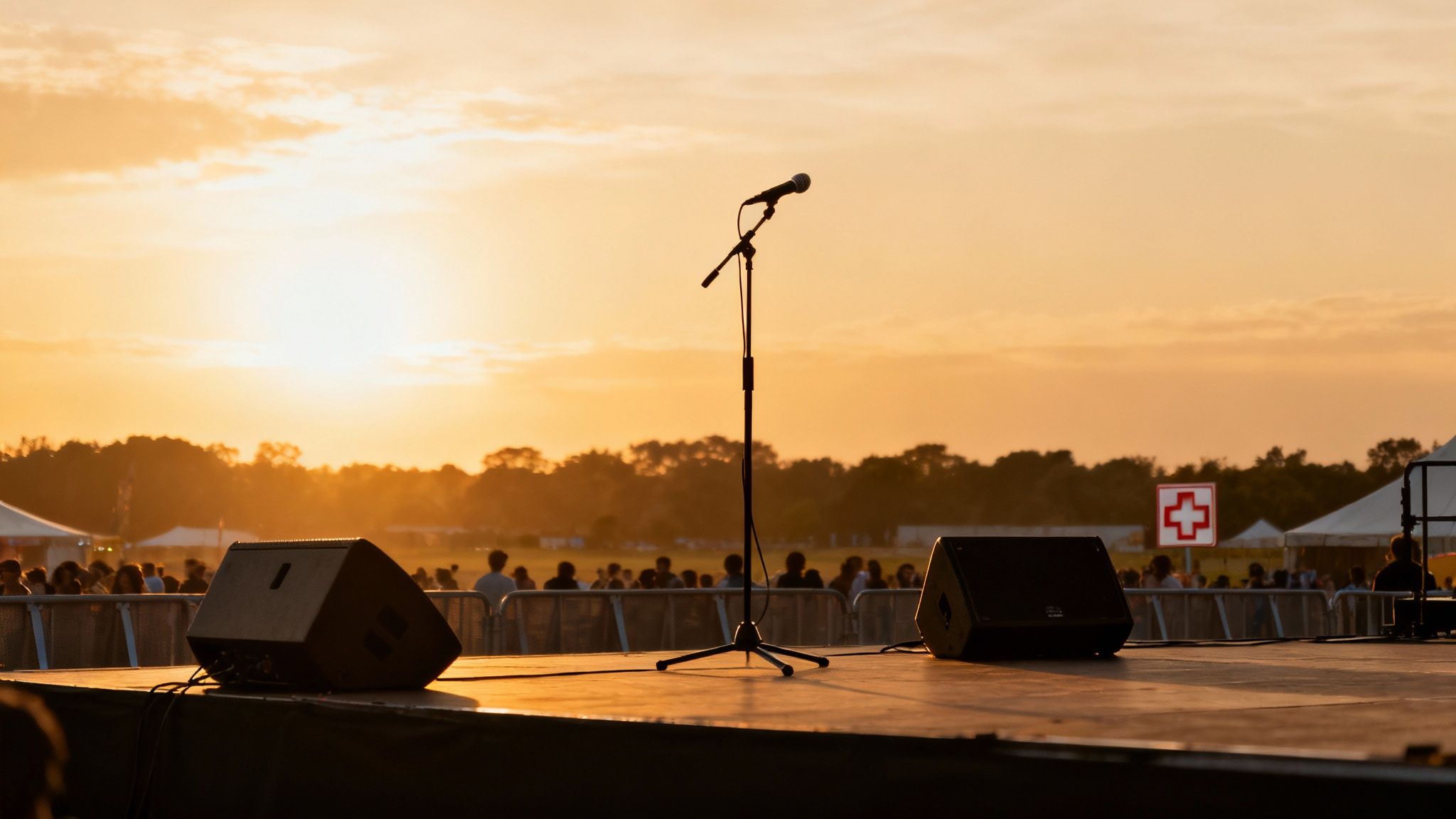
Managing festivals, concerts, and large-scale entertainment events requires a checklist built for complexity and scale. This template goes beyond typical event planning to cover critical areas like performer coordination, multi-stage logistics, extensive vendor management, and robust safety protocols. An effective festival checklist breaks down monumental tasks like securing permits, managing artist riders, and coordinating crowd control into a clear, chronological action plan. It's the master document for managing multiple moving parts for thousands of attendees.
✦Why It Works
This checklist is the operational backbone for world-renowned events. Coachella uses it to manage hundreds of artists and vendors, while Burning Man relies on it for intricate safety and infrastructure planning. These examples demonstrate that for large, public-facing events, a detailed checklist is non-negotiable for ensuring public safety, operational efficiency, and a seamless attendee experience. It transforms potential chaos into a controlled, memorable event.
Strategic Insight: The key principle here is risk mitigation and contingency planning. By systematically addressing potential issues like severe weather, security threats, and technical failures in advance, you can create a resilient event framework that protects attendees, staff, and performers.
✦Actionable Takeaways
- Secure Permits Early: Start the process with local authorities at least 6-9 months in advance.
- Create Contingency Plans: Develop detailed plans for adverse weather, medical emergencies, and security incidents.
- Systematize Communication: Use dedicated channels (like radios or a private app) for real-time communication between staff, security, and medical teams.
- Map Everything: Create detailed site maps for vendors, stages, emergency exits, and first-aid stations.
7. Nonprofit & Fundraising Event Checklist
Nonprofit events, such as galas, charity auctions, and fundraising dinners, demand a specialized approach. This type of event management checklist sample is designed not just for logistical success but for maximizing donor engagement and achieving specific fundraising targets. It prioritizes elements unique to the nonprofit sector, including volunteer coordination, sponsorship acquisition, mission-driven storytelling, and post-event donor stewardship, ensuring the event serves its ultimate purpose: to fund the organization's cause.
✦Why It Works
This checklist model is crucial for organizations where every dollar counts. Events like the American Cancer Society's Relay for Life and the American Heart Association's Heart Ball galas thrive on this structure. They successfully blend emotional, mission-focused narratives with meticulous financial planning, volunteer management, and donor recognition strategies. This focus ensures the event is not just a gathering but a powerful fundraising engine.
Strategic Insight: The key is to intertwine the fundraising appeal with every checklist item. From venue selection to menu choices, each decision should be evaluated on its potential to enhance the donor experience and reinforce the organization's mission.
✦Actionable Takeaways
- Goal-Oriented Planning: Set clear, data-driven fundraising goals and ensure event costs do not exceed 20-30% of projected revenue.
- Volunteer Power: Begin recruiting and training passionate volunteers 8-10 weeks in advance, assigning specific roles for check-in, auction support, and guest services.
- Storytelling is Key: Craft a compelling program that features impactful stories, directly connecting attendees' contributions to the mission.
- Follow-Up is Crucial: Send personalized thank you notes and impact reports to all donors within two weeks to foster long-term relationships and retention.
8. Product Launch Event Checklist
A product launch is more than an announcement; it's a meticulously choreographed performance designed to capture market attention. This specialized event management checklist sample focuses on coordinating every element, from pre-launch media briefings and influencer outreach to live demos and sales team enablement. It’s the essential playbook for orchestrating a high-impact go-to-market event that generates buzz, drives press coverage, and kickstarts sales momentum. It ensures every touchpoint, from the stage presentation to social media, is perfectly aligned.
✦Why It Works
This checklist model is the engine behind the world's most anticipated tech unveilings. Iconic presentations from Apple for the iPhone and Tesla for its vehicles are masterclasses in controlled, hype-building execution. They demonstrate how a detailed plan for managing media, messaging, and demos can turn a product announcement into a global cultural event, dominating headlines and social media conversations for days.
Strategic Insight: The goal is to create a "moment" by controlling the narrative. By providing media with embargoed information, preparing flawless demos, and briefing executives on key talking points, you shape how the product is first perceived by the world.
✦Actionable Takeaways
- Build Anticipation: Launch a teaser campaign on social media 2-4 weeks prior to the event.
- Prep Your Speakers: Conduct extensive rehearsals with all executive speakers to refine messaging and delivery.
- Enable Your Team: For internal teams that use both Slack and Google Calendar, a tool like Be There is very handy. It can streamline communication by creating a dedicated channel for launch day coordination and sending real-time calendar updates to stakeholders.
- Create Demo Stations: Design interactive, hands-on stations for media and attendees to experience the product firsthand. For a deeper dive into promotional strategies, explore this guide on creating an event marketing plan.
9. Seminar & Workshop Training Checklist
For educational events like seminars, workshops, and corporate training, the focus shifts from entertainment to engagement and knowledge retention. This specialized event management checklist sample prioritizes learning outcomes, instructor coordination, and material preparation. It ensures every detail, from defining clear educational objectives to distributing post-event resources and assessments, is methodically planned. This template is crucial for corporate training departments, educational institutions, and any organization aiming to deliver impactful learning experiences.
✦Why It Works
This checklist transforms a simple presentation into a structured educational journey. Platforms like Coursera and LinkedIn Learning master this by designing courses with a clear beginning, middle, and end. They manage instructor materials, participant workbooks, interactive exercises, and certification meticulously. This detailed approach ensures that participants don't just attend; they learn, retain, and can apply their new skills effectively.
Strategic Insight: The primary goal is knowledge transfer. Your checklist must be built around creating an optimal learning environment, which means scheduling frequent breaks, incorporating interactive elements, and providing comprehensive follow-up materials.
✦Actionable Takeaways
- Define Objectives: Start by outlining clear, measurable learning goals for participants.
- Prepare Materials: Develop and print comprehensive participant workbooks, slides, and case studies well in advance.
- Engage Actively: Build interactive exercises, group discussions, and Q&A sessions into the schedule every 60-90 minutes.
- Assess and Certify: Use a post-training survey to measure effectiveness and provide a certificate or digital badge for completion.
10. Social Media & Influencer Event Checklist
In today's digital landscape, the success of an event is often measured by its social media buzz. This contemporary event management checklist sample is engineered for events where online amplification is the primary goal, such as influencer collaborations, brand activations, and Instameets. It moves beyond traditional logistics to focus on creating shareable moments, coordinating with creators, developing a hashtag strategy, and generating a high volume of user-generated content (UGC). It’s the blueprint for turning a physical event into a viral online moment.
✦Why It Works
This checklist model is the driving force behind the immense online success of brands like Sephora and Netflix. Their influencer events are meticulously planned not just for the attendees in the room, but for their millions of followers online. They build photogenic installations, provide creators with clear messaging, and engage in real-time to maximize reach. These events prove that a checklist focused on digital engagement can generate a marketing impact far beyond the event's physical footprint.
Strategic Insight: The goal is to facilitate authentic, yet on-brand, content creation. Give influencers creative freedom within a structured framework that provides them with everything they need: great lighting, unique backdrops, key talking points, and a clear call to action.
✦Actionable Takeaways
- Curate Creators: Partner with 5-15 micro-influencers whose audience aligns perfectly with your brand.
- Design for Social: Create at least two "Instagrammable" moments or photo opportunities.
- Arm Your Advocates: Provide influencers with a brief containing key messages, product info, and the event hashtag.
- Track Everything: Use social listening tools to monitor the event hashtag for reach, engagement, and sentiment analysis in real-time.
Comparison of 10 Event Management Checklists
| Event Template | Implementation Complexity 🔄 | Resource Requirements ⚡ | Expected Outcomes 📊 | Ideal Use Cases 💡 | Key Advantages ⭐ |
|---|---|---|---|---|---|
| Conference & Convention Planning Checklist | High 🔄 — multi-track scheduling, many stakeholders | High ⚡ — large team, long lead time, significant AV/venue costs | 📊 Professional delivery, high attendee satisfaction, strong networking | 💡 Large professional conferences (50+ attendees, concurrent sessions) | ⭐ Comprehensive coordination; reduces operational risk |
| Wedding Planning Checklist | Medium–High 🔄 — highly customized timelines and vendors | Medium–High ⚡ — multiple vendors, 12–18 month timeline | 📊 Smooth ceremony/reception, budget control, guest experience | 💡 Private weddings, full-service planning for couples | ⭐ Reduces stress; clear milestone and vendor management |
| Corporate Event & Team Building Checklist | Medium 🔄 — cross-department alignment and objectives | Medium ⚡ — departmental budgets, venue and activity costs | 📊 Improved morale, measurable engagement, budget accountability | 💡 Company retreats, team-building, internal launches | ⭐ Strengthens culture; enforces policy and ROI tracking |
| Virtual & Hybrid Event Checklist | Medium–High 🔄 — tech integration + in-person logistics | Medium ⚡ — platform, IT support, bandwidth & security needs | 📊 Expanded reach, detailed engagement analytics, lower travel cost | 💡 Remote/global audiences, hybrid conferences, webinars | ⭐ Scalable reach; content archiving and replayability |
| Trade Show & Exhibition Booth Checklist | High 🔄 — booth design, on-site logistics, shipping | High ⚡ — booth build, shipping, dedicated staff, high upfront costs | 📊 Lead generation, brand visibility; ROI varies by execution | 💡 B2B expos, industry trade shows, product demonstrations | ⭐ Maximizes booth ROI; streamlines lead capture and follow-up |
| Festival & Entertainment Event Checklist | High 🔄 — performer, crowd control, safety & permits | High ⚡ — staging, security, insurance, extensive staffing | 📊 High ticket/vendor revenue potential; strong community impact | 💡 Outdoor festivals, concerts, multi-act entertainment events | ⭐ Creates memorable experiences; drives large-scale revenue |
| Nonprofit & Fundraising Event Checklist | Medium 🔄 — donor cultivation, volunteer coordination | Medium ⚡ — sponsorship solicitation, volunteer hours, possible donated venues | 📊 Fundraising revenue, donor retention, mission visibility | 💡 Galas, benefit dinners, charity runs, donor events | ⭐ Focused on revenue and donor relationships; mission alignment |
| Product Launch Event Checklist | Medium–High 🔄 — PR, demos, media coordination | Medium ⚡ — media outreach, demo builds, influencer/marketing spend | 📊 Media buzz, brand positioning, sales enablement | 💡 New product announcements, press launches, demo days | ⭐ Controls narrative; generates marketing content and momentum |
| Seminar & Workshop Training Checklist | Medium 🔄 — curriculum design and trainer prep | Low–Medium ⚡ — instructor time, materials, modest venue/tech | 📊 Knowledge transfer, certification, measurable learning outcomes | 💡 Professional development, training sessions, workshops | ⭐ Structured learning; measurable post-training impact |
| Social Media & Influencer Event Checklist | Low–Medium 🔄 — influencer coordination and UGC planning | Low–Medium ⚡ — creative assets, influencer fees, social monitoring | 📊 High social reach, user-generated content, real-time engagement | 💡 Brand activations, Instameets, influencer campaigns | ⭐ Organic amplification; authentic content and fast reach |
From Checklist to Reality: Streamlining Your Event Workflow
We’ve explored a comprehensive array of event management checklist samples, from large-scale conferences to intimate corporate workshops. Each checklist serves as a critical blueprint, providing the structure needed to navigate the complexities of planning, marketing, execution, and follow-up. The common thread woven through every successful event is not just having a plan, but having a system to implement it efficiently.
A checklist moves you from chaos to control. It ensures no critical detail, whether it's booking a keynote speaker or sending post-event thank you notes, falls through the cracks. As you've seen, the principles of proactive organization and clear communication are universal, regardless of the event's scale or purpose.
✦The Bridge Between Planning and Seamless Execution
For any team leader, HR professional, or internal communications specialist, the ultimate goal is to translate that meticulously crafted plan into a memorable and impactful experience. However, the administrative burden of manual coordination, endless email threads, and chasing RSVPs can quickly derail even the best-laid plans. This is the friction point where a great strategy meets operational reality.
The key takeaway is that your process is just as important as your plan. Adopting tools that automate repetitive tasks is no longer a luxury; it's a strategic necessity for maintaining momentum and focusing on what truly matters: creating engaging experiences. This is especially true for internal corporate events, where the goal is to boost morale and foster connection, not to add to your team's administrative workload.
✦Actionable Next Steps for Mastering Your Event Workflow
To transform your event planning from a stressful scramble into a streamlined process, consider these immediate actions:
- Standardize Your Templates: Use the event management checklist sample examples from this article as a foundation. Create standardized templates for your recurring event types (e.g., quarterly team-building, monthly all-hands) and store them in a shared, accessible location.
- Integrate Your Tools: The most significant efficiency gains come from connecting the platforms your team already uses. For companies that operate on both Slack and Google Calendar, the manual process of creating calendar invites, posting announcements, and sending reminders is a major time sink. This is where a tool like Be There proves to be very useful.
- Automate Where Possible: Identify the most time-consuming, repetitive tasks in your workflow. Sending reminders, tracking attendance, and gathering feedback are prime candidates for automation, freeing up your time for more strategic, high-impact activities.
For companies deeply embedded in the Slack and Google Calendar ecosystem, the challenge of event coordination is a constant hurdle. A specialized tool designed to bridge this gap can be a game-changer. Imagine creating a company event, inviting the team, and scheduling automated reminders directly within a Slack channel, with everything syncing perfectly to Google Calendar. This is how modern, efficient teams operate.
A checklist provides the "what," but a streamlined workflow, powered by the right tools, perfects the "how." By embracing integration and automation, you not only ensure flawless execution but also cultivate a more vibrant, connected, and engaged company culture. You transform event planning from a daunting task into a powerful tool for building community.
Ready to eliminate the manual work and streamline your internal event planning? Be There integrates directly into your Slack and Google Calendar workflow, allowing you to create events, automate reminders, and boost attendance without ever leaving your workspace. See how you can transform your corporate event management by trying Be There today.
Share this post

Planning your internal events has never been easier!
No more scheduling headaches—our Slack-connected web app keeps things simple. Less email, more fun! 🚀
 Prefer a quick walkthrough?