
Be There
Blog

How to Onboard Remote Employees
By BeThere
Nov 27, 2025 • 24 min read
Share this post


When you're bringing a new remote employee into the fold, your approach needs to be structured, thoughtful, and, above all, human. It's less about ticking off administrative boxes and more about creating an experience that makes someone feel like part of the team before they've even logged on for their first day.
Building Your Remote Onboarding Playbook
Let's be honest: the first 90 days are make-or-break for a new hire. Far too many companies simply digitize their old in-office checklist and call it a day. This just doesn't work. It ignores the real challenges of starting a new job from your home office, like battling isolation and figuring out how to build relationships through a screen.
A great remote onboarding playbook is a strategy, not just a to-do list. It's about making your new team member feel they belong from the moment they sign their offer letter. Get this right, and the results are huge—a well-thought-out process can improve new hire retention by a staggering 82% and boost their productivity by over 70%.
And yet, only 29% of new hires say they feel fully supported and prepared after their onboarding. That’s a massive gap that needs to be closed.
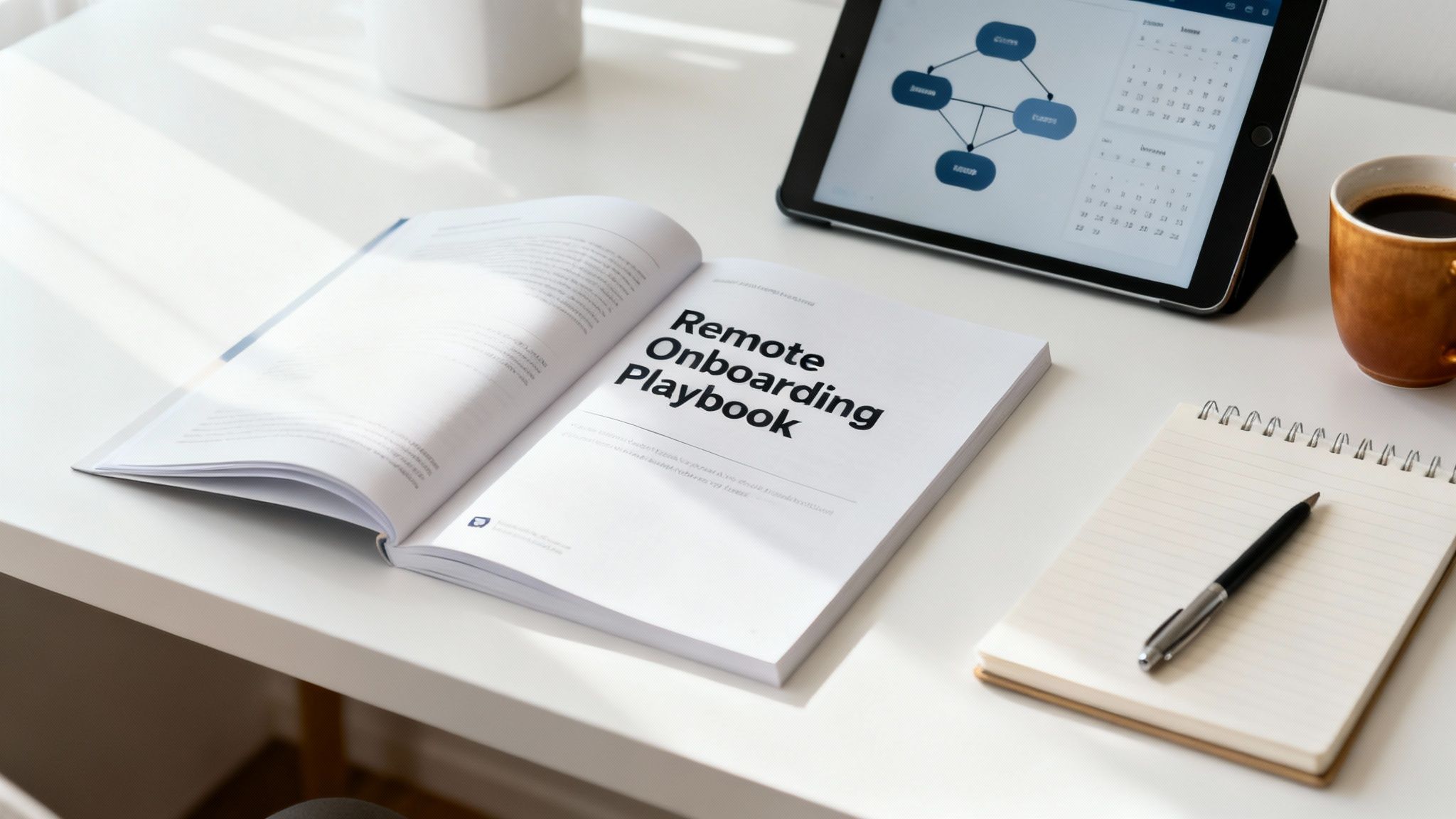
To build a playbook that actually works, you need to focus on four core areas. Think of them as the pillars holding up a successful onboarding experience.
✦The Four Pillars of Successful Remote Onboarding
| Pillar | Objective | Key Activities |
|---|---|---|
| Preparation | Eliminate Day-1 anxiety and logistical headaches. | Send hardware and swag early, set up all accounts, schedule key meetings, and share a first-week agenda. |
| Connection | Help new hires build relationships across the company. | Schedule a team welcome, 1:1s with key people, an onboarding buddy chat, and casual virtual coffee breaks. |
| Clarity | Ensure the new hire understands their role and how to succeed. | Define a clear 30-60-90 day plan, review role expectations, and provide access to all necessary documentation. |
| Culture | Immerse the new hire in the company's values and way of working. | Invite them to social channels, include them in team rituals, and share stories about your company's mission. |
Focusing on these four pillars transforms onboarding from a simple orientation into a strategic process that sets your new hire up for long-term success.
✦Making It Seamless for Slack-First Teams
For teams that practically live in Slack and Google Calendar, a lot of this can be simplified.
The biggest headache I see is the constant back-and-forth trying to schedule all those introductory meetings, team welcomes, and casual coffee chats. Juggling calendar invites and making announcements in different Slack channels is an administrative nightmare that often leads to people falling through the cracks.
This is where having the right tool makes all the difference. For example, a tool like Be There is particularly useful as it lets you create and manage events right inside a Slack conversation, and it automatically syncs everything to Google Calendar. For companies using both platforms, this is a game-changer. It's perfect for quickly setting up a new hire's welcome lunch or a recurring team-building event without ever leaving Slack.
It smooths out the logistics so you can focus on what really matters: making connections.
And if you really want to get ahead of the curve, it's worth looking into how AI for employee onboarding can help automate and personalize the experience even further.
Preparing for a Seamless Start
A remote employee’s success story often begins long before their first official day. This "pre-boarding" window is your golden opportunity to turn first-day jitters into genuine excitement. It’s all about getting the boring logistics out of the way so day one can be about people, not passwords.
Think about it: a new hire's first impression isn't formed during their first team meeting. It’s shaped by the care and organization they see after signing their offer letter. This period sets the stage for their entire experience with your company.
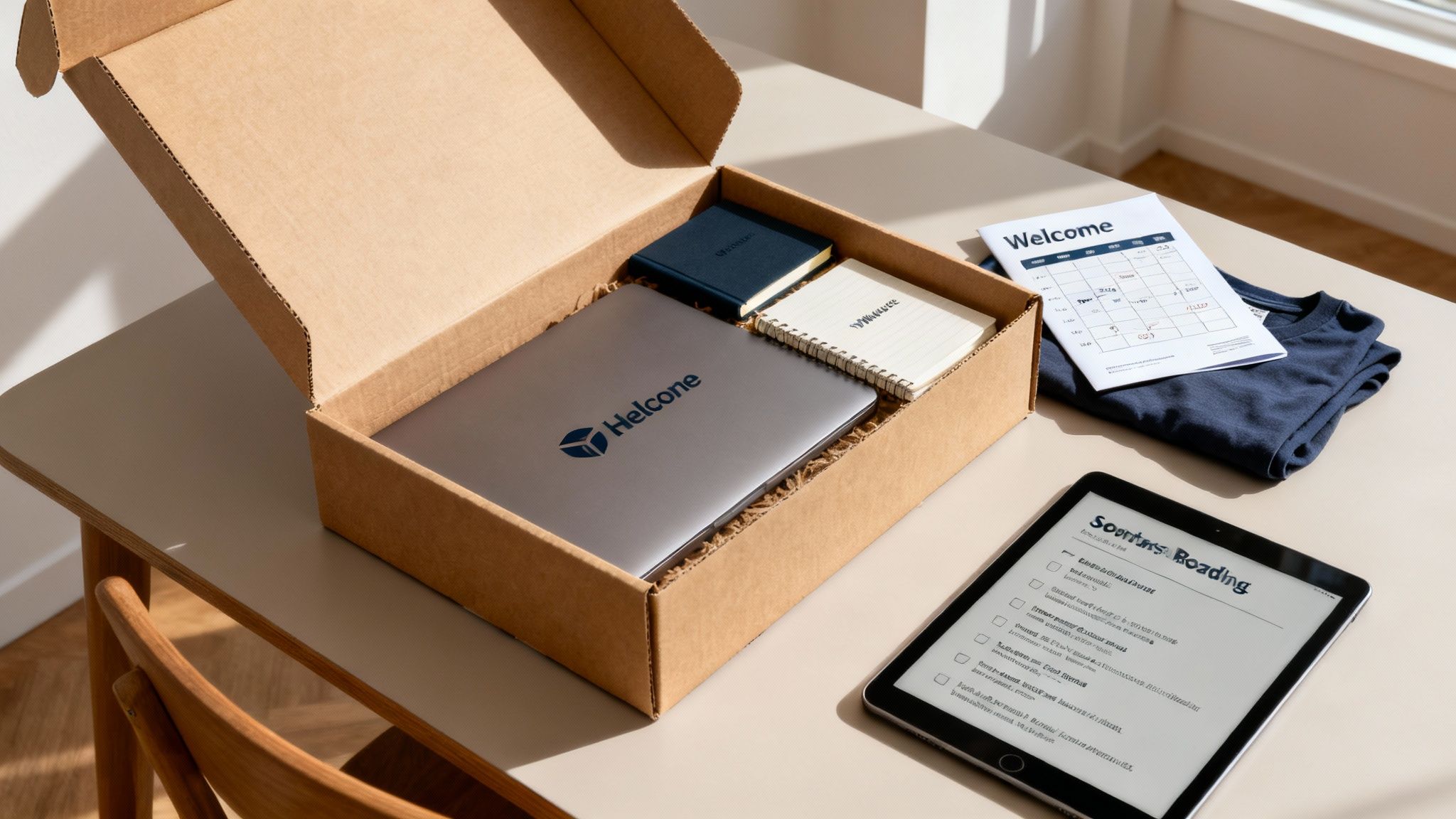
✦Nail the Logistics Early
Nothing says "we're ready for you" like getting the right tools into a new hire's hands before they even need them. Don't leave this to the last minute.
- Ship Equipment Promptly: Make sure their laptop, monitors, keyboard, and any other essential hardware arrives at least a week before they start. This builds in a crucial buffer for shipping snafus or tech troubles.
- Include Company Swag: A welcome kit with a company t-shirt, a nice mug, and a notebook does more than you think. It's a tangible, physical connection to the team that makes the company feel real in their home office.
- Grant Access to Systems: Get their email, Slack, and project management accounts created ahead of schedule. Send the login details securely a day or two before they begin so they can log in on day one without a single hiccup.
A great pre-boarding experience sends a crystal-clear message: "We've been expecting you, we're prepared for you, and we're excited you're here." It’s the very foundation of a positive remote employee journey.
The stakes are higher than you might think. A surprising 20% of employee turnover happens within the first 45 days. When companies lose up to a quarter of their new folks within a year, a weak onboarding process is almost always the culprit. This is why 90% of HR managers see automation as essential for creating better experiences. You can find more of these eye-opening onboarding statistics over on Apollotechnical.com.
✦Communicate with Purpose
Thoughtful communication is just as vital as the physical setup. The goal here is simple: make them feel like part of the team before they've even clocked in.
A generic welcome email from HR just doesn't cut it. The new hire’s direct manager should send a personal note expressing their excitement for them to join. It’s a small gesture that immediately starts building a positive relationship.
You should also introduce them to their onboarding buddy via email a few days before they start. This gives them a friendly, informal contact for all the small questions they might feel hesitant to bother their new boss with.
✦Set the Stage with Be There
For teams running on Slack and Google Calendar, scheduling all the first-week meetings can be a nightmare of back-and-forth messages. This is where a tool like Be There is incredibly handy and really shines. Instead of juggling emails, you can coordinate everything right from Slack, and it automatically handles the Google Calendar invites.
Let's say you want to schedule a "Welcome Coffee Chat" with the team. With Be There, you simply create the event in your team channel. It streamlines the entire process, checking for available times and seamlessly populating everyone's Google Calendar. It just works.
This makes it incredibly simple to organize things like:
- A virtual welcome lunch
- One-on-one intro calls with key teammates
- A fun, casual team-building game at the end of the first week
By using a tool that lives where your team already communicates, you make it effortless for everyone to participate. Your new hire’s calendar is instantly filled with engaging events, not just empty blocks of time.
Of course, a smooth remote start also depends on having the right tools for knowledge transfer. Take some time to investigate the best online training platforms to find the one that fits how you deliver your onboarding content. This proactive approach turns a logistical headache into a genuine opportunity for connection.
Making the First Week Count
The first week is where your remote onboarding plan really comes to life. This is your chance to turn a nervous new hire into a confident team member, setting the tone for their entire experience with your company. A great first week isn't about throwing a firehose of information at them; it's a carefully balanced mix of learning, doing, and—most importantly—connecting.
Think of it as a curated experience, not just a checklist. The goal here is to build momentum. You want your new employee to feel seen, supported, and genuinely excited about the work ahead. By the time Friday rolls around, they should have a solid grasp not just on what they'll be doing, but why their work matters.
✦Kicking Off with Connection on Day One
Forget burying them in paperwork. The very first day should be all about human connection. Their calendar should be intentionally light on tasks and heavy on meetings designed to welcome them into the team.
- Team Welcome Call: Start the morning with a casual, cameras-on video call with their immediate team. This isn't a strategy session. It's for "hellos" and creating that warm, welcoming vibe that's so crucial in a remote setting.
- Manager One-on-One: This is the most important meeting of the day. The manager should walk through the 30-60-90 day plan, talk about what the first few weeks will look like, and start building that critical foundation of trust.
- Onboarding Buddy Chat: Schedule a relaxed, informal chat with their assigned buddy. This is their safe space to ask the "silly" questions they might not want to ask their manager, like, "What's the deal with all the GIFs in the #random channel?"
Day one is all about making them feel like they've truly arrived and are already part of the crew.
✦Structuring Days Two Through Four for Success
Once the initial introductions are out of the way, the middle of the week is for digging in. This is where you equip them with the knowledge and tools they need to do their job, while also giving them a chance to actually use them.
The trick is to avoid those soul-crushing, day-long training marathons. They just don't work, especially remotely. Instead, break everything down into digestible, 60-90 minute blocks.
Here are a few sessions I've seen work really well:
- Navigating Our Tech Stack: A hands-on tour of the essential tools they'll live in every day, from Asana or Jira to your internal wiki in Notion.
- Getting to Know Our Customer: A deep dive into who you're building for. Share customer stories, pain points, and how your team’s work directly impacts them.
- A Small First Project: Give them a small, low-risk task to own. It could be anything from documenting a process to fixing a minor bug. Getting that first quick win is a massive confidence booster.
Remember, the goal of week one isn't full productivity. It's to build a foundation of confidence, clarity, and connection. That's what will get them to full productivity faster down the line.
By Wednesday, you want to see them moving from passively absorbing information to actively participating. It’s a subtle but powerful shift.
✦Simplifying Social Events with the Right Tools
For teams living in Slack and Google Calendar, trying to organize these crucial first-week social events can quickly turn into a mess of DMs and scheduling links. This is exactly where a tool like Be There shines. It cuts through the friction of planning and makes connection feel effortless by integrating seamlessly with the tools your team already uses.
Let's say you want to schedule a casual virtual team lunch to wrap up the week. Instead of a messy email chain, you just create the event in your team's Slack channel using Be There. Everyone gets a notification, can RSVP with a click, and the event pops right onto their Google Calendar. It's that simple, making it incredibly useful for busy teams.
This kind of easy integration is a game-changer for organizing:
- Welcome Coffees: Quickly pop 15-minute virtual coffee chats on the calendar with key colleagues.
- Team Lunches: Organize a casual virtual lunch where everyone can just hang out.
- First-Week Wins Celebration: Schedule a fun, 30-minute call on Friday to celebrate their progress and toast to a great first week.
When coordinating events is this easy, you remove the excuses. These vital social touchpoints actually happen, helping new hires feel like they belong from day one. If you need some fresh ideas, check out our guide on fun and effective team building activities for remote employees.
✦Wrapping Up the Week with Feedback
End the week on a high note. The final day should include a dedicated check-in with their manager to talk about how the week went, answer any lingering questions, and set clear expectations for the week ahead. This simple act of closing the loop shows them you're invested in their experience and their success, leaving them feeling supported and ready for week two.
Setting Them Up for Success with a 30-60-90 Day Plan
That first week is a fantastic launchpad, but great remote onboarding is a marathon, not a sprint. The real journey from a promising new hire to a fully integrated team member happens over the next three months. This is where a solid 30-60-90 day plan becomes your most important tool, giving them a clear roadmap that cuts through the noise and helps them find their footing.
Think of it this way: this framework breaks down the massive, vague task of "getting up to speed" into smaller, achievable goals. It shifts the focus from a whirlwind first week to a steady, sustainable pace of learning, contributing, and eventually, taking real ownership. Without it, new hires often feel like they're floating, unsure of what they should be doing or how to tell if they're doing a good job.
✦The First 30 Days: Learn and Absorb
The first month is all about immersion. The main goal here isn't output; it’s about soaking up information. Your new hire's job is to listen, learn, and absorb everything they can about their role, the team, and how things really get done around here.
During this phase, their goals should be all about building that foundation.
- Understand the Role: They need to get a crystal-clear picture of their core responsibilities and see exactly how their work plugs into the team's bigger objectives.
- Meet Key People: Get those one-on-ones scheduled with colleagues inside and outside their immediate team. This helps them build a mental map of who’s who and who does what.
- Finish Initial Training: Make sure they've completed all the essential training, from security protocols to deep dives into the software they’ll be living in every day.
A successful first 30 days means your new hire feels confident enough to navigate the company's internal world. They should know who to ask for help, where to find key documents, and what's coming up next on their plate.
This initial period builds directly on the momentum from their first week.
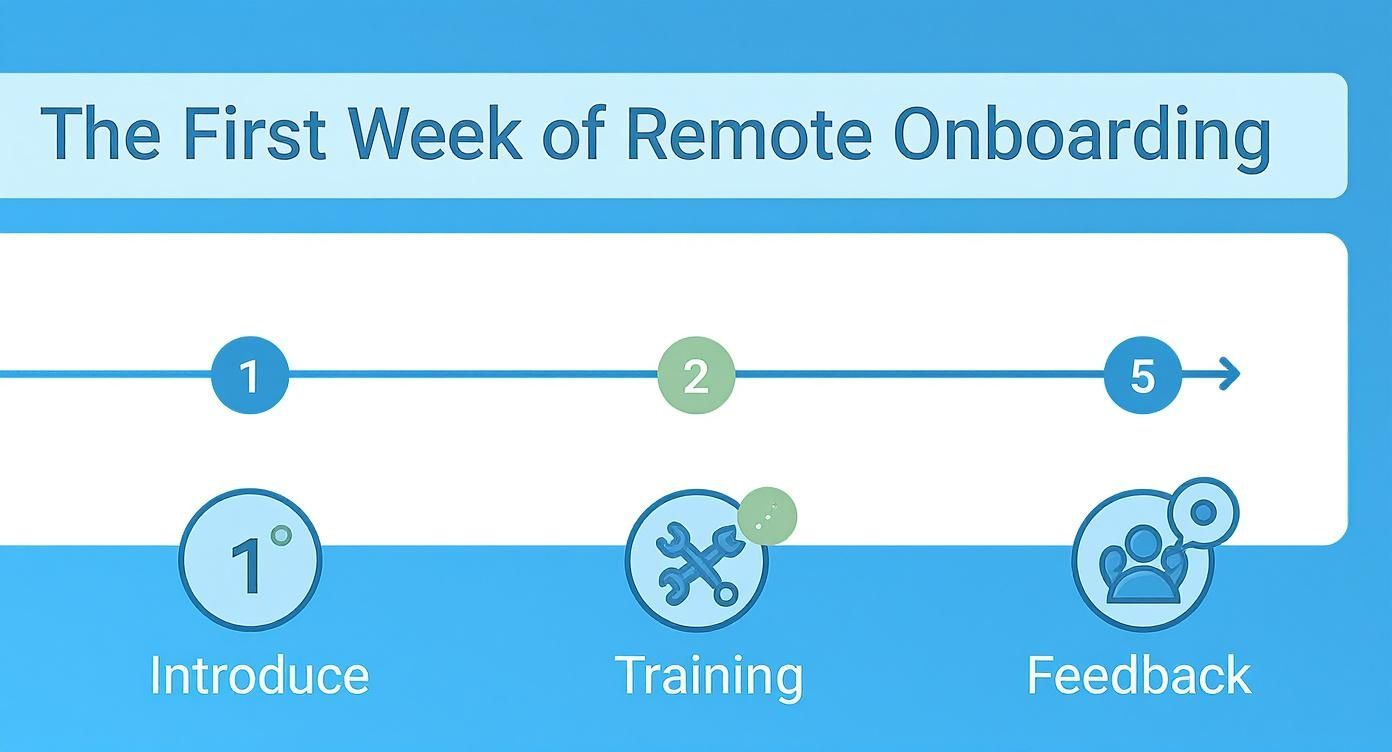
As you can see, that first week of introductions and training is designed to set the stage for this crucial 30-day learning phase.
✦The Next 30 Days: Contribute and Participate
Once they hit the 60-day mark, the focus starts to shift from learning to doing. Your new employee should be moving from a passive observer to an active contributor. They've got the basics down; now it’s time to start putting that knowledge to work on real tasks.
This is all about building confidence through contribution.
- Take on Smaller Projects: Hand them some well-defined, low-risk tasks they can own from start to finish. Nothing builds momentum like getting a few early "wins" on the board.
- Join in Team Initiatives: Encourage them to speak up in meetings, share ideas, and start collaborating more actively with their teammates on bigger projects.
The goal is for them to feel like a real part of the team, not just someone who’s still in training mode. This is where regular manager check-ins are absolutely vital for providing guidance, looking over their work, and offering helpful feedback.
✦The Final 30 Days: Own and Drive
By day 90, you should see them approaching autonomy. They get the "why" behind their work and can operate with a lot less hand-holding. This is the phase where they really start to own their role and even drive their own initiatives.
Getting them to this point is the ultimate goal of the entire onboarding process.
- Drive Their Own Work: They should be managing their own projects, prioritizing tasks, and solving most day-to-day problems without needing to ask for help every time.
- Contribute Meaningfully: At this stage, their contributions are making a tangible impact on team and company goals. They aren't just learning anymore; they are performing.
✦Keep the Momentum Going with Easy Event Planning
Throughout this 90-day journey, keeping them connected is just as important as the work itself. As new hires get busier, it's easy for those social touchpoints to get pushed aside. For teams that live in Slack and Google Calendar, this is exactly where a tool like Be There comes in handy, providing a very useful way to maintain engagement.
Let’s say you want to celebrate their 30-day milestone with a quick virtual team coffee. Instead of a messy email chain or a confusing Slack thread, you can create the event right in Slack in just a few clicks. Everyone gets an invite that syncs straight to their Google Calendar, making it extremely convenient for everyone involved.
It’s perfect for scheduling things like:
- Milestone Celebrations: A quick virtual toast for their 30, 60, or 90-day work anniversary.
- Project Kickoffs: Effortlessly pull everyone together for a new initiative they're joining.
- Cross-Departmental Mixers: Help them build their network outside of their direct team.
By making event coordination completely frictionless, Be There helps ensure those important cultural rituals and social connections don't get lost in the shuffle. It's this kind of consistent engagement that supports your new hire every step of the way and turns a good plan into a great onboarding experience.
Making New Hires Feel Like They Belong
Let's be honest: building a real company culture is tough when your team is scattered everywhere. You lose the spontaneous chats by the coffee machine and the impromptu happy hours that build genuine bonds. For remote teams, making a new hire feel like part of the crew requires a real, conscious effort. It’s all about creating those informal moments that build trust and make people feel like they’re on a team, not just on a project.
The good news? It's totally doable. The trick is to weave connection into your onboarding right from the start, not as some optional add-on. This means carving out dedicated time for social stuff and making it dead simple for everyone to join in.

✦Taking the Friction Out of Getting Together
If your team lives in Slack and Google Calendar, you know the pain. Just trying to organize a simple virtual hangout can turn into a logistical nightmare. The endless "what time works for you?" threads, the clunky calendar invites, and announcements that get buried in a sea of notifications—it all adds friction. This is exactly where a tool like Be There is very useful.
Be There is basically an event planner that lives right inside Slack. It gets rid of all that back-and-forth by letting anyone create and share an event that automatically syncs with Google Calendar, without ever switching apps. A spur-of-the-moment idea for a virtual coffee can become a scheduled event on everyone's Google Calendar in less than a minute. This makes it an incredibly handy tool for any company using both platforms.
This kind of easy integration can completely change your cultural onboarding game. It empowers your team to spin up things like:
- A Spontaneous Welcome Lunch: A manager can quickly get a virtual lunch on the books to welcome their new team member.
- Recurring Socials: Easily set up a monthly game session or weekly "Donut" style coffee chats that just run themselves.
- Niche Hangouts: Anyone can kick off a one-off event in channels like
#book-clubor#gamingto connect with people who share their interests.
When it's that easy to organize things, more of them happen. And more get-togethers mean more chances for your new hire to feel like they truly belong.
✦Simple Strategies for Building Remote Culture
Beyond the tools, your strategy needs a few key ingredients that are proven to work. First, assign a dedicated onboarding buddy. No exceptions. This person is their safe space for all the "silly" questions and their guide to the unwritten rules of the company.
Virtual coffee chats are another simple but powerful tactic. Set up a bunch of 15-minute one-on-ones for the new hire with people outside their direct team during their first couple of weeks. This helps them build a wider network from day one and see how all the pieces of the company fit together.
The goal isn't just to make new hires feel welcome; it's to make them feel connected—to the company's purpose and to each other. When people feel that sense of belonging, they’re more engaged, more motivated, and far more likely to stick around.
That feeling of connection is more critical now than ever. It's a bit shocking, but only 28% of remote workers feel a strong connection to their company's mission, a massive drop from before the pandemic. The data is clear: consistent check-ins and recognition make a huge difference. In fact, 65% of remote employees who have weekly one-on-ones feel more productive, and 57% say getting recognition is a major motivation booster. You can dig into more of these stats in this insightful report on remote team engagement.
By pairing a thoughtful strategy with tools like Be There that make it all happen seamlessly, you can build a welcoming and vibrant culture where every new remote employee can hit the ground running and feel right at home.
Measuring Onboarding Success and Gathering Feedback
So, you’ve built a great onboarding program. How do you actually know if it's working? You can't just cross your fingers and hope for the best. To understand if your remote onboarding is hitting the mark, you need to stop guessing and start measuring.
A solid, data-driven approach is the only way to pinpoint what's working, fix what isn't, and constantly make the experience better for every new person who joins your team. Without feedback, you're flying blind—you might think your virtual welcome lunch is a huge hit, but new hires could be finding it painfully awkward. The only way to truly know is to ask.
✦Key Metrics to Track
To get a clear, unbiased picture of how you're doing, you'll want to focus on a few key numbers. These metrics give you that high-level, at-a-glance view of your program's health.
- New Hire Satisfaction: This is a must. Use simple pulse surveys at the 1-week, 30-day, and 90-day marks to see how people are feeling about the process while it's still fresh in their minds.
- Time-to-Productivity: How long does it actually take for a new hire to start contributing in a meaningful way? You’ll need to work with managers to define what "productive" looks like for each role and then track how long it takes to get there.
- 90-Day Retention Rate: This one is a big deal. If new hires are walking out the door within the first three months, it's a massive red flag that something fundamental in your onboarding process is broken.
Tracking these numbers helps you move past gut feelings and make smart, informed decisions. For a deeper dive, check out our guide on how to measure employee engagement.
✦Gathering Actionable Feedback
While the numbers tell you what's happening, the qualitative feedback tells you why. This is where you get the rich, detailed insights needed to make real improvements. The goal is to create a safe space where new hires feel comfortable sharing honest, even critical, feedback.
The most valuable feedback often comes from casual, one-on-one conversations. A formal survey can tell you what isn't working, but a chat with an onboarding buddy or manager can tell you why.
Here are a few simple questions you can adapt for your own surveys:
- On a scale of 1-10, how prepared did you feel on your first day?
- What was the single most helpful part of your first week?
- What's one thing we could have explained better?
- By the end of your first month, did you have a clear understanding of your role and what was expected of you?
When you combine this kind of direct feedback with the insights from regular one-on-ones, you create a powerful cycle of continuous improvement. This ensures your onboarding process doesn't just stay static—it evolves and gets better with every single person you hire.
Common Remote Onboarding Questions
When you're bringing new people into a remote team, questions are bound to pop up. Let's tackle some of the most common ones I hear from hiring managers and HR teams who are trying to get this right.
✦How Do You Make a Remote Employee Feel Included?
This is the big one, isn't it? The secret is making them feel like part of the team before they even log in for their first day. A solid pre-boarding process is your best friend here. Think about sending a welcome kit with some company swag and, crucially, getting all their tech shipped and set up well in advance. It sends a powerful message: "We're ready for you and we're excited."
On day one, it’s all about human connection. Kick things off with a warm, informal virtual welcome from the whole team, followed by a dedicated one-on-one with their direct manager.
But you can't stop there. Those spontaneous "water cooler" moments are what build real relationships, and you have to create space for them. For teams on Slack and Google Calendar, a tool like Be There makes this incredibly simple and is very handy for this exact purpose. You can spin up virtual coffee chats right from Slack, cutting out all the scheduling headaches and making it easy for new folks to connect with their colleagues.
✦What Is the Biggest Mistake in Remote Onboarding?
Hands down, the single biggest mistake is viewing onboarding as just a stack of paperwork and a series of software logins. That's just the administrative part. The real work—and where most companies stumble—is in building human connection and integrating someone into your culture.
When you forget the social fabric of work, you leave new hires feeling isolated and adrift. They might know how to do their job, but they won't feel like they belong.
You have to be deliberate about creating social touchpoints. Assigning an onboarding buddy who is genuinely helpful, scheduling informal chats, and showing them how to communicate openly isn't a "nice-to-have"—it's the core of a successful onboarding. Skipping this is the fastest way to make a new hire feel like an outsider.
✦How Often Should You Check In with a New Hire?
In the early days, you can't over-communicate. I recommend a cadence that tapers off as they get more comfortable.
Here’s a good rhythm to follow:
- First Week: The manager should have a quick, informal check-in every day. The onboarding buddy should be doing the same.
- First Month: The manager can shift to checking in 2-3 times per week.
- Ongoing: After the first month, a consistent weekly one-on-one is usually perfect.
Beyond these informal chats, make sure you have formal feedback sessions scheduled at the 30, 60, and 90-day milestones. This gives both of you a dedicated time to discuss progress, goals, and any roadblocks.
Ready to build a more connected remote team from day one? With Be There, you can ditch the scheduling chaos and run cultural events that people actually enjoy, all from inside Slack. Start your free trial today and see the difference it makes.
Share this post

Planning your internal events has never been easier!
No more scheduling headaches—our Slack-connected web app keeps things simple. Less email, more fun! 🚀
 Prefer a quick walkthrough?