
Be There
Blog
How to Promote Events for Maximum Attendance
By BeThere
Nov 13, 2025 • 18 min read
Share this post


When you break it down, successfully promoting an event really comes down to three key phases: smart planning, smart execution across different channels, and finally, looking back at what worked. It's about figuring out your audience and goals first, then getting the word out everywhere from email to social media, and wrapping up by measuring your results so you can do even better next time.
Laying the Groundwork for a Sold-Out Event
Before you even think about sending that first promotional email or scheduling a social media post, you need a solid foundation. This is the make-or-break stage where you get crystal clear on who you're talking to and what you're trying to accomplish. If you skip this, you’ll just be shouting into the void.
The absolute first thing on your list is to identify your target audience. Are you trying to pull in seasoned industry pros, folks from the local community, or your own team members? The answer changes everything—your messaging, the channels you pick, and the entire vibe of your campaign.
✦Define Your Goals and Message
Once you know who you’re talking to, you can set real, measurable goals. Don't just aim for "a good turnout." Get specific. Are you shooting for 500 registrations? Do you need to generate 100 qualified leads for the sales team? Or maybe you're aiming for a 90% internal attendance rate. These numbers aren't just for show; they're the compass that guides your entire strategy.
For a deeper dive, our guide to building an event marketing plan walks you through this process step-by-step.
With your goals locked in, it’s time to nail your messaging. Every potential attendee has one question running through their head: “What’s in it for me?” Your job is to answer it, loud and clear.
- Hosting a professional workshop? Talk about career growth, new skills, and killer networking.
- Putting on a community festival? Lead with entertainment, family fun, and celebrating local culture.
- Running an internal all-hands? Focus on company news, connecting with colleagues, and employee recognition.
This isn't just a hunch; tailoring your message works. A staggering 96% of marketers have seen sales increase from creating personalized experiences. And while new channels are always popping up, don't sleep on email. It’s still a powerhouse, with average open rates sitting at a healthy 32.55%.
✦Establish Your Event's Identity
Last but not least, give your event a consistent look and feel. This means getting a logo designed, picking a color palette, and choosing fonts that you'll use everywhere—on your landing page, ticketing platform, social media graphics, and email headers. A cohesive brand identity makes your event look professional and instantly recognizable, building trust and getting people excited from the moment they first see it.
Alright, you've got the groundwork for your event laid out. Now comes the fun part: getting people excited enough to actually show up. This is where a smart digital promotion strategy separates a sold-out event from an empty room. It's not about shouting into the void; it’s about a coordinated effort on the channels where your audience already lives.
Industry stats show that 83% of marketers lean on social media to spread the word. Right behind that, you have search engine marketing at 67% and video at 66%. What does that tell us? A single-channel approach just doesn't cut it anymore. You need to be in multiple places at once.
This flow chart gives a great high-level view of how to get from concept to promotion-ready.
Nailing these early steps is what makes your digital campaigns work. It ensures you have a clear message and a registration process that doesn’t make people give up halfway through.
✦Choosing the Right Platforms
Where you promote is just as important as what you say. Your audience dictates your channels, period. Hosting a B2B webinar on the future of SaaS? You should be all over LinkedIn and running targeted email campaigns. Planning a local craft fair? Get on Facebook and Instagram to build that community buzz.
But what about internal events? Think all-hands meetings, training sessions, or team-building events. The best channel is the one your team already has open all day. Sure, you can send a Google Calendar invite, but we all know how easily those get buried between a dozen other meetings. Attendance drops simply because people never really saw the event.
The secret is to meet your team where they're already communicating. For the thousands of companies running on Slack and Google Calendar, the magic happens when you connect the two.
✦Automating Internal Buzz with Slack and Google Calendar
Nobody has time to manually poke every single person about the upcoming company off-site. It's a thankless task for HR managers and team leads, and the results are often disappointing.
This is where a tool like Be There becomes incredibly useful and handy. For companies that rely on both Slack and Google Calendar internally, it’s built to solve this exact problem by seamlessly linking the two.
Here’s how it completely changes the game for internal event promotion:
- Instant Visibility: As soon as an event hits the Google Calendar, a notification pops up in a dedicated Slack channel like
#announcementsor#team-social. No more "I didn't know about it!" - Actionable Reminders: Forgetful folks get a friendly nudge right in Slack, where they can’t miss it.
- One-Click RSVPs: Employees can RSVP with a single click from the Slack message. It’s frictionless.
This kind of integration turns a passive calendar invite into an active, engaging announcement that drives real participation. While you're streamlining internal communication, don't forget your external audience. Using automated email campaigns is a fantastic way to keep potential attendees engaged. And if you need a hand with that, our guide to crafting the perfect email event invitation has you covered.
✦Top Digital Channels for Event Promotion
Choosing the right mix of channels can feel overwhelming. To make it easier, here's a quick breakdown of the heavy hitters, what they're best for, and how to measure success.
| Channel | Primary Use Case | Key Metric |
|---|---|---|
| Email Marketing | Nurturing leads, sending direct invitations, and follow-ups. | Open Rate, Click-Through Rate (CTR) |
| Social Media | Building buzz, community engagement, running targeted ads. | Engagement Rate, Reach, Registrations from UTM links |
| Promoting B2B events, webinars, and professional workshops. | Lead Generation, CTR on event page | |
| Slack (Internal) | Announcing company events, sending reminders, driving RSVPs. | RSVP Rate, Employee Engagement |
| Paid Search (SEM) | Capturing high-intent users actively searching for events. | Cost Per Acquisition (CPA), Conversion Rate |
This table isn't exhaustive, but it covers the core platforms that consistently deliver results. The key is to pick a few that align with your audience and master them rather than trying to be everywhere at once.
Boosting Internal Event Attendance Effortlessly
While most of our focus tends to go toward promoting external events, sometimes the hardest people to reach are sitting right down the virtual hallway: our own team.
Getting everyone to show up for company-wide events like all-hands meetings, training sessions, or even team-building activities can be a real headache. It seems simple enough, but a surprisingly high number of these internal events end up with disappointing turnout.
We’ve all been there. You create an important event in Google Calendar, send out the invite, and then... crickets. The notification gets buried under a mountain of other meetings and daily to-dos. The day of the event rolls around, and you realize half the team forgot it was even happening. It’s a huge missed opportunity for everyone.
✦Closing the Gap Between the Calendar and the Conversation
The core of the problem is a communication breakdown. Events live in one place (Google Calendar), but our teams live and talk somewhere else entirely (usually Slack). A calendar is great for organizing, but it’s a passive tool. Relying on it alone to promote an event is like putting a flyer up in an empty room and hoping people wander by.
If you really want to get people to show up, you have to bring the event announcement into their daily workflow. This is where the right tool can make a world of difference. For companies that use both Slack and Google Calendar, what if every new company event in the calendar automatically popped up in the right Slack channels? Suddenly, that event is front and center.
The best way to get your team to an internal event is to stop making them hunt for the details. Bring the announcement directly to where they already spend their day. This shift from passive scheduling to active communication is the secret to getting more people to show up.
This is exactly the problem Be There was built to solve. It’s a particularly handy tool because it creates a smart connection between your Google Calendar and Slack, making sure every event gets seen without you having to lift a finger.
The screenshot below shows just how clean and simple it is to create an event that automatically gets pushed to both places.
What you’re seeing is a super intuitive setup. You just add your event details, and Be There turns them into a polished and clear Slack notification. It takes a boring calendar entry and transforms it into an announcement that’s impossible to ignore.
✦How One Simple Integration Changes Everything
Let's look at a classic example. Your company is holding its quarterly all-hands meeting online. Before, the HR manager would have to create the Google Calendar event, then manually copy and paste reminders into a bunch of different Slack channels, and probably send out a follow-up email or two. It’s a ton of work, and people still miss the meeting.
For a company using Slack and Google Calendar, an integration like Be There makes the whole process hands-off:
- The HR manager creates the event in the company’s Google Calendar, just like they always do.
- Be There spots the new event and instantly posts a sharp-looking announcement in the
#announcementsSlack channel. - The post includes everything people need: date, time, the meeting link, and a clear call to action to RSVP.
- Team members can RSVP with a single click, right from inside Slack. No friction.
- Automated reminders get sent out in Slack as the event gets closer, keeping it on everyone’s radar.
This simple workflow does more than just save hours of admin time—it genuinely gets more people to participate. The all-hands meeting is no longer just another block on a calendar; it becomes an active, visible part of the company conversation.
If you’re looking for more tips on structuring these kinds of get-togethers, our guide on how to plan virtual events has some great pointers. Ultimately, this approach takes internal event promotion from a nagging chore to a streamlined, effective, and automated process.
Don't Forget About In-Person Promotion
While it’s easy to get lost in digital strategies, there’s a certain magic that only happens with real-world connections. In-person promotion creates a tangible excitement that can make a local gathering the talk of the town. Even with all our online tools, nothing quite beats face-to-face interaction for building genuine buzz.
This is all about getting out from behind the screen and creating moments right where your audience lives and works. You’re aiming to create experiences that people feel compelled to share, effectively turning them into your best marketers.
✦Building Buzz on the Ground
Getting started with in-person promotion doesn't need to be complex. A fantastic way to begin is by partnering with local businesses that already have your ideal audience's attention. For example, if you’re hosting a wellness workshop, why not team up with local gyms, health food stores, or yoga studios? You can display flyers and offer their members an exclusive discount.
Another great tactic is to create print materials that truly stand out. Think beyond a basic flyer. A well-designed poster, a cool postcard, or even branded coasters left at popular cafes can catch someone's eye and stick in their memory. The goal is to make something people want to look at, photograph, and maybe even take with them.
In-person events aren’t just another channel; for many, they are the channel. They create a focal point for all your other marketing and generate authentic excitement that’s tough to replicate online.
This real-world energy almost always translates into online engagement. In fact, data shows that a whopping 72% of event attendees create and share content from live events. That user-generated content is pure marketing gold, giving you the kind of authentic social proof that no ad campaign can ever buy. You can dig into the full research to learn more about these event marketing statistics.
✦Getting People Talking
Ultimately, the goal of any in-person effort is to spark word-of-mouth. It’s still one of the most trusted forms of marketing out there, and live events are the perfect way to get that fire started.
Here are a few ideas to get the conversation going:
- Street Teams: Put together an enthusiastic team to hand out flyers or free samples in high-traffic areas. Their positive energy is contagious and helps create a personal connection right from the start.
- Pop-Up Experiences: Host a small, interactive preview of your main event in a public space. This gives people a little taste of what’s to come and a story to tell their friends.
- Exclusive Pre-Events: Organize a small, private gathering for local influencers, media contacts, or community leaders. Giving them an early sneak peek can trigger a wave of positive press and social media chatter before you even open the doors.
These tactics work because they tap into a simple truth: 78% of organizers see in-person events as their single most impactful marketing channel. By putting time and effort into real-world promotion, you're building a genuine community and making your event something people simply can't miss.
Measuring What Matters for Better Future Events
The event is over, the last person has logged off, and you're ready to call it a day. It's tempting to close the book and move on, but hold on—the most critical part of your promotion strategy is just getting started.
If you don't take the time to dig into what actually worked, you’re just guessing for the next one. This is where you turn all that raw data from your hard work into real, actionable insights. You need to know more than just how many people showed up; you need to understand why they came, where they heard about you, and what it cost to get them there.
✦Identifying Your Core Event KPIs
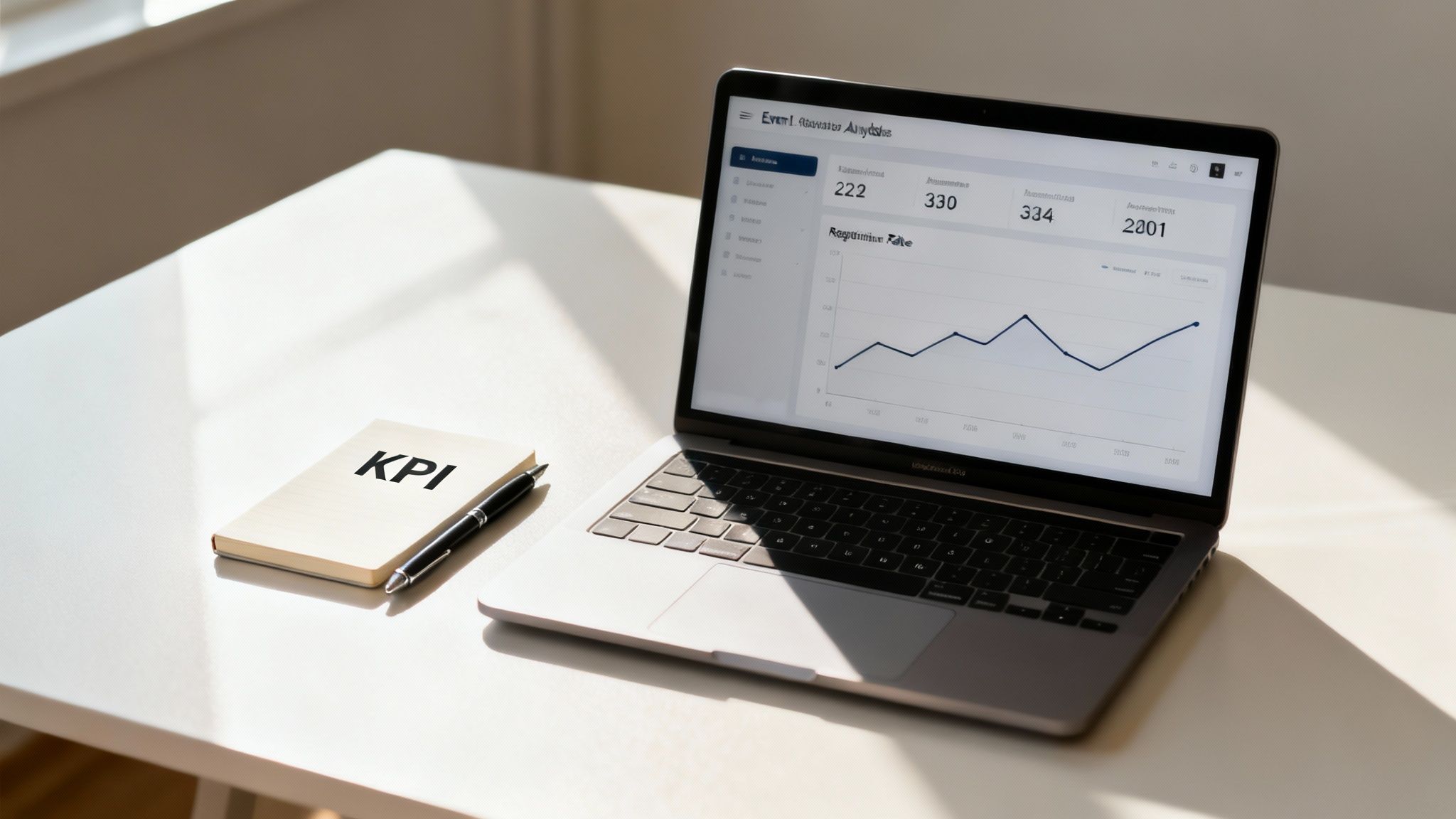
To get a clear picture, you need to track a handful of key performance indicators (KPIs). The trick is not to get lost in a sea of metrics. Instead, focus on the ones that tell you the most important stories about your promotional efforts.
Here are the essentials I always keep an eye on:
Registration Sources: Where did your attendees actually come from? Was it that LinkedIn ad, your email newsletter, or a random share on social media? This is where using UTM codes on every single link pays off big time. It gives you a crystal-clear map of what's driving sign-ups.
Attendance Rate: This is simply the percentage of registrants who showed up on the day. For paid events, you're aiming for a strong 80-90%. A high rate means your pre-event communication kept people excited. A low rate? That's a red flag that something fell flat between registration and showtime.
Cost Per Attendee (CPA): This one is pure, beautiful simplicity. Just divide your total promotion budget by the number of people who attended. This single number reveals how efficient your spending was and is your best friend when it comes to budgeting for the next event.
Social Media Engagement: Don't just count likes. Look at the reach of your posts, how many times your content was shared, and how often your event hashtag was used. This gives you a real feel for the buzz you created and whether your message connected.
The goal isn't just to collect numbers, but to understand the story they tell. If one channel delivered attendees at half the cost of another, you know exactly where to double down on your budget next time.
✦Gathering Feedback for Future Improvements
Numbers tell one part of the story, but your attendees' opinions fill in the rest. Finding out what they really thought is pure gold. The best way to get this is with a simple post-event survey sent out within 24 hours while the experience is still fresh.
Keep it short and ask direct questions that give you the insights you need:
- How did you hear about this event? This is a great way to double-check your registration source data. You might even uncover powerful word-of-mouth channels you weren't even tracking.
- What was the best part of the event? Their answers tell you what to shout about in your next promotional campaign.
- What could we improve for next time? This is your roadmap for making the next event unmissable.
When you mix hard data with genuine feedback, you create a powerful loop. It’s how you stop flying blind and start promoting smarter, ensuring every event you plan is a bigger success than the one before it.
Got Questions About Event Promotion? We’ve Got Answers.
Even the most well-thought-out promotion plan comes with its own set of questions. Let's tackle some of the most common hurdles event organizers run into, from choosing the right channels to simply getting your own team to show up.
✦What’s the Most Effective Channel for Promoting an Event?
The best channel is always where your audience already hangs out. There's no magic bullet here; it all comes down to who you're trying to reach. For consumer events, social media is an absolute powerhouse—a staggering 83% of marketers rely on it to generate buzz.
But if you're in the B2B space, you'll likely find that targeted LinkedIn campaigns and good old-fashioned email marketing deliver more bang for your buck. And for internal events? Go direct. Nothing beats pushing notifications right where your team works. An automated tool like Be There that pipes Google Calendar invites directly into Slack is a perfect example. It gets the event in front of everyone without them having to lift a finger.
✦How Far in Advance Should I Start Promoting?
Timing is everything, and it really depends on the scale of your event. For smaller gatherings like webinars, a 4-6 week promotional window is a good rule of thumb. It gives you enough time to build momentum without your audience getting tired of hearing about it.
If you're planning a mid-sized conference or a multi-day workshop, give yourself 2-3 months. This gives you a nice runway for things like early-bird ticket sales, speaker announcements, and content marketing to build anticipation. For those huge, annual flagship events, you might even start planning a full year out to lock in major sponsors and keynote speakers.
✦How Can I Get More People to Attend My Internal Company Events?
The biggest enemy of internal event attendance is a lack of visibility. Sure, the event is on Google Calendar, but it's probably buried between a dozen other meetings. The trick is to bring the announcement into the communication tools your team lives in every day.
The secret is to stop making people hunt for event details. When you bring the announcement into the daily conversation, attendance naturally goes up.
This is where a tool like Be There really shines, especially for companies using both Slack and Google Calendar. It is incredibly handy as it automatically sends your Google Calendar invites into specific Slack channels, turning a passive calendar entry into an active, hard-to-miss notification. This simple integration is a game-changer for getting more people to show up and participate.
✦What Are Some Low-Budget Ways to Promote an Event?
You don't need a massive budget to create a huge splash. The key is to focus on high-impact, low-cost activities that rely more on effort than ad spend.
- Create content people want to share: Think eye-catching graphics, short video clips, and a unique event hashtag to tie all the social chatter together.
- Lean on your network: Ask your speakers, sponsors, and partners to share the event with their audiences. It's a fantastic way to extend your reach for free.
- Tap into your email list: Your existing email subscribers are a warm audience. A well-crafted email campaign is one of the most direct and cost-effective promotional tools you have.
- Find a promotion partner: Team up with a non-competing business or organization that has a similar audience. You can cross-promote each other's events and tap into a whole new group of potential attendees.
Ready to transform your internal event promotion? Be There makes it effortless to connect Google Calendar to Slack, ensuring your team never misses an important announcement again. Start your free trial and see how easy it is to boost attendance.
Share this post

Planning your internal events has never been easier!
No more scheduling headaches—our Slack-connected web app keeps things simple. Less email, more fun! 🚀
 Prefer a quick walkthrough?