
Be There
Blog

How to Reduce Employee Turnover and Keep Your Best People
By BeThere
Nov 23, 2025 • 23 min read
Share this post


Before you can fix a turnover problem, you have to grasp what it’s actually costing you. It’s so much more than just recruiter fees and job board postings. The real damage happens silently, in the form of lost knowledge, sinking morale, and the heavy burden left on your remaining team. A smart retention strategy is all about getting ahead of these issues to build a workforce that wants to stay.
Why Your Best Employees Are Quietly Leaving
High turnover isn't just an HR line item; it's a slow leak that drains your company's energy, expertise, and forward momentum. People often fixate on the direct cost of replacement, which is huge—often estimated at 33% of an employee's annual salary. But the invisible costs are what can truly cripple a team.
Think about it. When a seasoned employee leaves, a huge chunk of unwritten knowledge walks out the door with them. It’s the stuff that’s not in any manual: who to call for what, the history of a client relationship, or the quirky workarounds for your internal systems. That knowledge gap creates an immediate productivity vacuum that everyone else has to scramble to fill.
✦The Ripple Effect on Your Team
The impact on the remaining staff is immediate and intense. Suddenly, they’re shouldering extra work, which often means longer hours and more stress. This is a classic recipe for burnout, and it's your best people—the ones who step up—who are most at risk of becoming disengaged and starting their own job search.
Team morale also takes a nosedive. A revolving door of colleagues creates a sense of instability and makes it hard to build real team cohesion. People start wondering, "If they left, should I be looking too?" It's crucial to get to the root of why this is happening. For a deeper look, this list of 50 reasons why employees leave is a great starting point.
A proactive retention strategy isn't just a 'nice-to-have'—it's a critical pillar for sustainable growth. By focusing on why people stay, you build a powerful competitive advantage.
✦From Reactive to Proactive Retention
The most important shift you can make is moving from a reactive "fill the empty seat" mindset to a proactive "keep our best people" culture. This is all about creating an environment where people feel valued, see a clear future, and are genuinely connected to their work.
To make this cultural shift stick, you need to get serious about:
- Building real career paths: People need to see a ladder to climb, not just a dead-end job.
- Investing in your managers: The old saying is true—people leave managers, not companies. Training your leaders to be great coaches is non-negotiable.
- Recognizing people's work: A simple, consistent "thank you" or public shout-out goes an incredibly long way in making people feel seen.
Once you truly understand the hidden costs of turnover, investing in these proactive retention efforts becomes a no-brainer. If you're looking for more ways to keep your team fired up, our guide on how to motivate employees has some great ideas.
Your First 90 Days: A Make-or-Break Onboarding Plan
Let’s be honest: a new hire often decides whether they're going to stick around for the long haul within their first three months. If their first few weeks are a chaotic mess of forgotten logins, awkward silences, and no clear direction, that initial excitement fades fast. You can't just hand someone a laptop and hope for the best.
This is why turning onboarding from a simple administrative checklist into a genuine cultural welcome is one of the most powerful things you can do to combat turnover. The goal is to make them feel like they've absolutely made the right choice.
The first week is all about building confidence and connection, not just drowning them in paperwork. When a new hire feels overwhelmed or isolated, buyer's remorse sets in. Instead, you want to create a structured, welcoming environment that sets them up for a few small wins right away and helps them build real relationships from day one.
✦Structuring the First Week for Success
The mission for week one is simple: make your new hire feel seen, supported, and genuinely excited to be there. This means thoughtfully balancing the necessary HR tasks with meaningful introductions and a clear, manageable first assignment. A well-planned first week prevents that dreaded feeling of sitting around, wondering what you're supposed to be doing.
Here’s a practical way to approach it:
- Day One: Focus entirely on welcome and logistics. Get their tech working flawlessly, introduce them to their assigned work buddy, and treat them to a team lunch. The most important part? Their direct manager should have a dedicated one-on-one session to set a positive tone and walk them through the plan for the week.
- Mid-Week: Give them their first small, achievable project. This isn't about productivity; it's about giving them a sense of purpose and letting them contribute immediately. This is also a great time to schedule short, 15-minute intro meetings with key people they'll be working with in other departments.
- End of Week: Circle back with a friendly check-in. Review what they’ve accomplished, answer their questions, and—crucially—ask for feedback on their onboarding experience so far. This simple act shows you value their perspective right from the start.
This timeline gives a great visual of how a new hire's journey should progress from initial welcome to becoming a fully integrated team member.
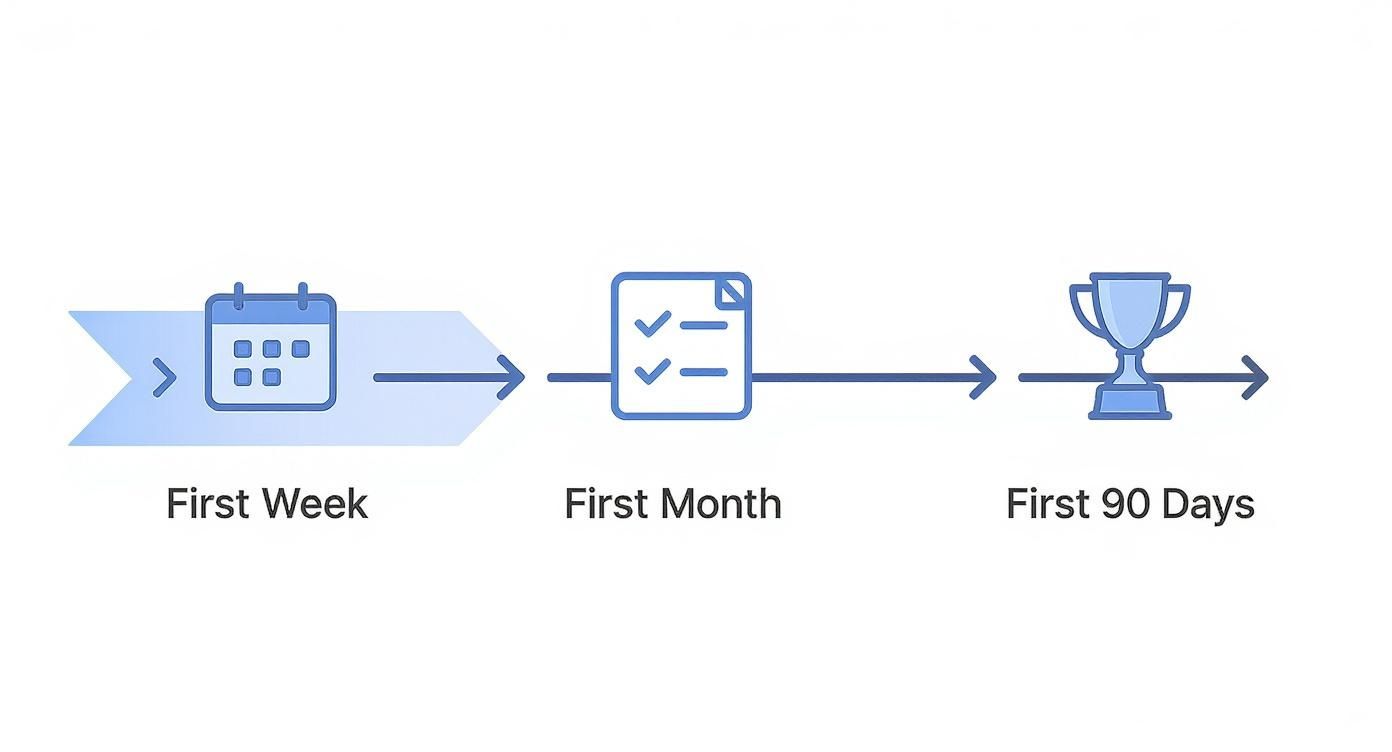
As you can see, a structured approach that moves from a warm welcome to clear goals and eventual recognition is what builds momentum and makes a new hire feel truly part of the company.
✦Fostering Connection with Seamless Events
Building social connections is just as important as learning the job role, especially for remote and hybrid teams where you can't just bump into someone at the coffee machine. Creating low-pressure, genuinely fun social events is a fantastic way to weave new hires into the fabric of your company culture.
But for companies using both Slack and Google Calendar, organizing these events can be a logistical nightmare. You post an announcement in Slack, then manually create a Google Calendar invite, chase down RSVPs, and send out reminders. It's a clunky process that often results in low attendance and a frustrated organizer.
This is where a tool like Be There is incredibly handy. As a native integration, it connects Slack and Google Calendar so they work together seamlessly. You can create a "New Hire Welcome Coffee" right inside a Slack channel, and it automatically syncs to everyone's calendar. No more juggling platforms.
With Be There, you can set up a recurring monthly welcome event in just a few minutes. That consistency ensures no new hire ever slips through the cracks, giving them a dedicated space to connect with colleagues and feel like they belong.
✦From Onboarding to Integration
A great onboarding experience doesn't just stop after the first week. That entire 90-day period is your opportunity to reinforce that they made the right decision by joining your team.
The numbers don't lie. A startling 61% of employees leave within their first year, and more than half of those departures happen within the first six months. On the flip side, companies with a strong, structured onboarding program see a 50% improvement in new hire retention.
Regular check-ins are absolutely essential. A manager should be meeting with their new report weekly for the first month, then maybe bi-weekly, to chat about progress, clear any roadblocks, and just offer support. These conversations build trust and give the new hire a safe space to ask questions they might otherwise feel nervous about.
For more ideas on building a rock-solid foundation, you can find some great strategies for effective employee onboarding here. By investing in an ongoing, supportive experience, you dramatically increase the odds that your fantastic new hire becomes a loyal, long-term employee.
Creating a Culture of Engagement That People Won’t Leave
Let's be honest: a disengaged employee is already halfway out the door. Long before they’re polishing their resume, you can see the signs. Their motivation starts to dip, their productivity slides, and that connection they once had with the team just isn't there anymore. If you're serious about reducing turnover, you have to build a culture that acts like a magnet, pulling people in and making them want to stay.
This isn't about the superficial stuff like free snacks or the occasional pizza party. Real engagement taps into something much deeper—the fundamental human need to feel valued, see a real future for yourself, and feel like you belong. It’s about creating an environment where people want to bring their A-game every day.

The numbers don't lie. Companies with highly engaged employees report 41% lower absenteeism and a 17% jump in productivity. The bad news? U.S. employee engagement recently slumped to an 11-year low, with only 32% of workers feeling genuinely engaged. That widespread disconnect is a huge driver of turnover, as people who feel like just another cog in the machine are always the first to look elsewhere. You can dig into this trend and what it means for retention right here.
✦Beyond the Annual Review: Fostering Continuous Growth
One of the biggest traps I see companies fall into is cramming all career conversations into a single, dreaded annual performance review. Your top performers are hungry for growth. If they can't see a clear path forward with you, you can bet they'll start looking for one with your competitor.
The fix is to build a culture of continuous growth, where development is an ongoing dialogue, not a once-a-year event. It’s about consistently showing your team that you’re invested in where they’re headed.
This means managers need to shift their thinking. They aren't just evaluators; they're career coaches. Their job is to help people pinpoint their strengths, work on their weaknesses, and find projects that light them up and align with their goals.
- Implement Quarterly Check-ins: Carve out dedicated one-on-one time each quarter to talk purely about career aspirations. Ask questions like, "What skills are you excited to build this year?" or "What kind of project would get you fired up to come to work?"
- Create Simple Growth Plans: Don't overcomplicate it. Work with each person to map out 2-3 achievable development goals for the next six months. Maybe it's mentoring a junior colleague, taking an online course, or taking the lead on a small internal project.
- Promote from Within: Before you even think about posting a job externally, look at the talent you already have. This sends a powerful signal that loyalty and hard work actually lead to real opportunities here.
✦The Power of Recognition and Belonging
Feeling invisible is a fast track to burnout and resignation. At the end of the day, everyone wants to know their work matters and is being noticed. A true culture of recognition is built on small, consistent acts of gratitude, not just grand, infrequent gestures.
In the same way, a sense of belonging is non-negotiable. When people feel like they’re part of a real community—a team that has their back—they become far more invested in the group's success. This is absolutely critical for hybrid and remote teams, where those spontaneous "water cooler" moments just don't happen on their own.
A simple, sincere "thank you," delivered in a specific and timely way, can often mean more than a year-end bonus. It reinforces great work and makes people feel genuinely seen.
To get this right, you have to be intentional about creating moments for connection and appreciation. That means building systems that make it easy and natural. To learn more about this foundational piece, check out our guide on how to create company culture that actually sticks.
✦Making Connection Effortless
Organizing engagement events is critical, but for companies that rely on both Slack and Google Calendar, the coordination can be a huge pain. You announce an event in Slack, then have to manually create the calendar invite, bug people to RSVP, and chase them down with reminders. All that friction leads to low turnout, which completely defeats the purpose.
This is exactly where a tool like Be There is so useful. It acts as the bridge between Slack and Google Calendar, making the whole process ridiculously simple.
Say you want to start a recurring "Peer Recognition Hour" each month. With Be There, you create the event right inside your Slack channel. It instantly syncs to everyone’s Google Calendar, sends out automated reminders, and tracks RSVPs without you ever having to leave Slack. It removes all the administrative headaches that come from using two separate platforms and makes it effortless for people to join in, ensuring your engagement efforts actually work.
Effortless Event Planning for Hybrid and Remote Teams
Keeping your team connected is crucial for building a culture people don’t want to leave. This is especially true for hybrid and remote teams, where you can't rely on those spontaneous "water cooler" moments. You have to create them. But let's be honest, organizing even simple events can feel like a logistical nightmare that makes you question if it's worth the effort.
Most companies today live in two apps: Slack for communication and Google Calendar for scheduling. The big problem? They don’t talk to each other. This creates a clunky, disjointed process for planning events, which is a huge roadblock to creating the consistent, positive interactions that keep people around.
✦The Pain of Manual Event Coordination
Let's say you want to set up a simple "Virtual Coffee Mixer" each month. It's a great idea to help new folks meet the team and strengthen existing bonds. But for any team using both Slack and Google Calendar, the old way of doing it is a familiar kind of frustrating.
First, you post an announcement in a company-wide Slack channel and cross your fingers that people see it. Then you have to jump over to Google Calendar to create the actual invite, manually pasting in the meeting link and details. From there, you either spam the entire company with an invite (and get a flood of "decline" notifications) or you paste the calendar link back into Slack and start chasing people down to RSVP.
To top it off, you end up sending manual reminders in Slack the day before, hoping to nudge a few more people to show up. It's a broken workflow that piles on unnecessary admin work. Worse, all this friction means fewer people attend, making your engagement efforts feel like a flop. When it's a pain for people to join, they just don't. That lack of connection can make remote employees feel isolated—a key reason people start looking for a new job.
✦A Seamless Bridge Between Slack and Google Calendar
This is where connecting your communication and scheduling tools becomes a total game-changer for engagement and retention. A purpose-built tool like Be-there.co is incredibly useful because it acts as a direct bridge, creating a single, simple workflow for event management right where your team already is: Slack.
By getting these two platforms to work together, you get rid of all the manual back-and-forth. You can create, announce, and manage that "Virtual Coffee Mixer" in one spot, making it incredibly easy for everyone to see, join, and actually attend. That simplicity is the secret to fostering the kind of regular, low-effort social connections that build a strong, tight-knit culture.
This is what it looks like to create an event right from a Slack channel. Notice how everything you need is right there.

You can add all the details—from the event name to the video link—without ever leaving the conversation.
✦A Real-World Walkthrough: The Virtual Coffee Mixer
Let’s go back to that "Virtual Coffee Mixer" idea, but this time, let's do it the easy way. The goal is to make it effortless for people to join in, which naturally boosts engagement and helps everyone feel like they belong.
Here’s how the process changes:
- Create the Event in Slack: You head to your
#social-eventschannel and use the app to create a new event. You name it "Monthly Virtual Coffee Mixer," set it to repeat on the last Friday of every month, and pop in the video conference link. Done. - Automatic Calendar Sync: The second you post it, it’s not just a message. It automatically lands on the Google Calendar of everyone in that channel. No more sending separate invites or begging people to add it themselves.
- One-Click RSVPs: Team members can RSVP with a single click on a button right in the Slack message. This gives you an instant headcount and creates a bit of social proof—when people see their colleagues are going, they're more likely to join in.
- Automated Reminders: The system automatically sends reminders in Slack before the event, keeping it on everyone's radar without you having to nag anyone.
By removing the administrative burden, you can focus on the purpose of the event—building connection—rather than the logistics. This shift is crucial for making engagement a sustainable part of your strategy to reduce employee turnover.
To truly see the difference, let’s compare the old way with the new way.
✦Planning a Team Event Before and After Be-there.co
| Task | Manual Process (Without Be-there.co) | Streamlined Process (With Be-there.co) |
|---|---|---|
| Event Announcement | Post in a Slack channel, hope people see it. | Create the event directly in the relevant Slack channel. |
| Scheduling | Switch to Google Calendar, manually create the event. | Event is automatically created and synced to Google Calendar. |
| Inviting Attendees | Manually invite a list or paste a link back into Slack. | Everyone in the channel is automatically invited. |
| Collecting RSVPs | Chase people down, manually track responses. | Attendees RSVP with one click directly in Slack. |
| Sending Reminders | Manually post reminders in Slack the day before. | Automated reminders are sent to the channel before the event. |
The contrast is pretty stark. One path is filled with manual tasks and friction, while the other is built for ease and participation.
This integrated process does more than just save you time. It massively lowers the barrier to participation, which has a direct impact on your retention goals. When employees feel genuinely connected to their coworkers, they are more engaged, more collaborative, and far more likely to stick around for the long haul. By making these vital connections easy to build and maintain, you're investing directly in the social fabric of your company, making it a place where people truly want to work.
How to Measure Your Retention Efforts
You can't fix what you don't measure. It’s an old saying, but it holds true. Rolling out new retention strategies without tracking their impact is like driving blind—you feel like you’re making progress, but you have no idea if you're actually getting closer to your destination.
To figure out if your efforts are truly paying off, you need to get comfortable with the data. This isn't about drowning in spreadsheets. It’s about picking a few key numbers that paint a clear, honest picture of your company's stability and turning them into real insights. That’s how you move from guesswork to smart, strategic decisions.
✦Identifying Your Core Retention Metrics
Before you can spot improvements, you need to know where you stand today. Your first move is to establish a baseline by tracking a few essential metrics. These numbers tell the story of who is leaving, when they’re leaving, and maybe even hint at why.
Think of them as the vital signs for your company. A sudden spike in one area can be an early warning sign, alerting you to a problem before it escalates into a full-blown crisis.
Start with these three:
- Overall Turnover Rate: This is your big-picture number. To get it, just divide the number of people who left in a specific period (like a quarter or a year) by the average number of employees you had during that time. Tracking this month over month shows you the general trend.
- First-Year Attrition: This one is a goldmine. It puts a spotlight directly on your onboarding and the new hire experience. If this number is high, it’s a massive red flag that your new folks are either a poor fit from the start or, more likely, aren't getting the support they need to find their footing.
- Regrettable Turnover: Let’s be honest—not all turnover is created equal. This metric focuses on the departure of your high-performers and high-potential team members. These are the people you absolutely can't afford to lose, and knowing when they walk out the door helps you focus your efforts where they matter most.
✦Gathering Qualitative Data Through Exit and Stay Interviews
Numbers tell you what is happening. Conversations tell you why.
Your quantitative data might point to a problem in a specific department, but it’s the qualitative feedback from your team that gives you the context needed to actually solve it. This is where a couple of types of interviews become your most powerful tools.
Exit interviews are your last chance to get brutally honest feedback. Don't just check a box. Ask direct questions about their manager, their role, the culture, and what finally pushed them to leave. After a few of these, you’ll start to see patterns emerge.
Stay interviews are the proactive cousin to exit interviews. By asking your current, most valued employees what keeps them here—and what might tempt them to leave—you can uncover and fix issues before anyone even thinks about resigning.
✦Using Event Attendance to Gauge Engagement
Here’s a metric that often gets overlooked: participation in company events.
Are people actually showing up for your virtual coffee chats, workshops, or all-hands meetings? Low attendance isn't just a scheduling conflict; it's often a clear sign of disengagement, which is a major precursor to turnover.
For companies that use Slack and Google Calendar, getting people to events can be a real headache. The clumsy back-and-forth between the two platforms means RSVPs fall through the cracks because it's just too much work for employees.
A handy tool like Be There solves this problem by connecting these platforms. It lets you create events directly in Slack that automatically sync to Google Calendar, removing all the friction. This gives you a much cleaner read on engagement because you can easily see who’s consistently showing up and who might be pulling away.
✦Turning Insights into Action
Data is useless if you don't do anything with it.
Schedule a recurring quarterly meeting with your leadership team to review all your retention metrics. Present the numbers, share the themes you’ve uncovered from interviews, and point out the trends—both the good and the bad.
Use that discussion to build a targeted action plan. For a deeper dive into what to track, our guide on how to measure employee engagement offers more metrics and frameworks.
By creating a simple rhythm of measuring, analyzing, and acting, you build a powerful feedback loop that gets better and better at keeping your best people right where they are.
Answering Your Top Questions About Employee Turnover
Even with the best plan, you're going to have questions as you start tackling employee turnover. It's a complex issue. Let's dig into some of the most common ones that come up for HR pros and team leads.
✦What’s a Good Employee Turnover Rate, Anyway?
This is the million-dollar question, and the honest answer is: it depends. A "healthy" turnover rate is completely relative to your industry. A restaurant might consider a 30% turnover rate manageable, while for a software company, anything over 10% would set off alarm bells.
Instead of chasing a magic number, focus on two things: your industry benchmark and your own internal trends. A steady climb in your turnover rate over several quarters is a much clearer signal that something’s wrong.
The real goal isn't just a lower number—it's reducing regrettable turnover. You want to stop losing your top performers, the people who are a nightmare to replace.
✦How Can We Reduce Turnover With a Tiny Budget?
Big budgets for retention are nice, but they aren't necessary. Some of the most effective strategies for keeping people happy and engaged cost little to nothing. It's often less about expensive perks and more about the daily experience.
You get the biggest bang for your buck by focusing on communication and recognition.
- Meaningful One-on-Ones: This is a big one. Train your managers to have real conversations, not just status updates. They need to be listening to career goals and roadblocks.
- Peer Recognition: A simple #kudos channel in Slack can work wonders. It gives everyone the power to celebrate each other's wins and fosters a culture of appreciation from the ground up.
- Flexibility: Offering flexible hours or remote work options costs you nothing, but the value to an employee trying to balance life and work is immense.
These small, consistent efforts build a supportive culture that makes people feel seen and valued—and that's something money can't buy.
✦How Long Does It Take to See a Real Change?
You’ll likely see positive flickers pretty quickly. Things like higher scores on your engagement surveys or more people showing up to company events can happen within the first three months. These are your leading indicators—the early signs that your efforts are hitting the mark.
But seeing a real, measurable drop in your overall turnover rate takes patience. That’s a longer-term play. You should expect it to take a solid 6 to 12 months of consistent work to see a significant downward trend.
One area you might see faster results is with new hires. If you overhaul your onboarding process, you could see a drop in first-year attrition in under six months. Just remember to be consistent and track both your short-term engagement wins and the long-term turnover numbers to see the full story.
Ready to make engagement effortless and boost retention? Be There is the first event planner built directly for Slack, helping you create, manage, and promote company events that people actually attend. It seamlessly syncs with Google Calendar, sends automated reminders, and removes all the administrative headaches, so you can focus on what really matters—building a connected and motivated team.
Start your free trial today and see how easy it is to foster a culture people won't want to leave.
Share this post

Planning your internal events has never been easier!
No more scheduling headaches—our Slack-connected web app keeps things simple. Less email, more fun! 🚀
 Prefer a quick walkthrough?