
Be There
Blog

What is Employee Morale? Key Insights to Boost Team Productivity
By BeThere
Dec 11, 2025 • 19 min read
Share this post


You can feel it the moment you walk into an office. Is there a buzz of energy, or a heavy silence? That feeling—that collective attitude and outlook—is employee morale. It's the emotional pulse of your company, a direct reflection of how confident, motivated, and engaged your people feel day in and day out.
What Is Employee Morale, Really?

Think of morale as the invisible force that powers your team. When it’s high, it’s a bright, energetic climate that fuels collaboration and growth. When it’s low, it creates a gloomy, stagnant atmosphere that holds everyone back.
This isn't just about surface-level happiness, either. It’s a deep indicator of your organization's health.
High morale creates real, measurable business advantages. Teams with a positive outlook aren't just nicer to be around; they're more productive, creative, and resilient. In fact, companies with highly engaged employees see 23% higher profitability. It makes sense—people who are excited to be at work simply do better work.
✦The Key Ingredients of Great Morale
So, what actually makes up morale? It’s a mix of a few core feelings that shape the overall vibe of your workplace.
- Job Satisfaction: Are people content with their daily tasks, their pay, and their work-life balance?
- Confidence: Does your team trust the company's leadership and believe in its future? Do they feel secure in their own roles?
- Enthusiasm: Is there a genuine energy? Do people willingly go the extra mile, pitch new ideas, and help their colleagues succeed?
Morale isn't just a mood; it's a powerful indicator of your company's potential. A team with high morale doesn't just check boxes—they actively solve problems, innovate, and push the business forward with a shared sense of purpose.
To see these differences in action, here’s a quick breakdown of what high and low morale look like in a typical workplace.
✦Employee Morale at a Glance
| Indicator | Sign of High Morale | Sign of Low Morale |
|---|---|---|
| Collaboration | Teams work together eagerly and share ideas freely. | People work in silos; there's finger-pointing. |
| Communication | Open, honest, and proactive discussions are common. | Communication is guarded; gossip and rumors spread. |
| Productivity | Deadlines are met with quality work; people take initiative. | Deadlines are missed; output is inconsistent. |
| Attendance | Low absenteeism; people are present and engaged. | High rates of sick days and unexplained absences. |
| Attitude | Positive, can-do attitudes; challenges are seen as opportunities. | Complaining is frequent; there's a sense of cynicism. |
Ultimately, understanding morale is the first step toward building a workplace where people feel seen, valued, and motivated. This effort is a huge part of shaping a strong organizational environment. If you want to dig deeper, a great next step is learning how to create company culture.
Investing in your team's spirit isn't a "nice-to-have"—it's a direct investment in your company's success.
Why Morale Is More Than Just a Feeling

It’s easy to dismiss morale as a "soft" metric, something fluffy and hard to pin down. But that’s a huge mistake. Smart leaders know that employee morale is a powerful key performance indicator (KPI), every bit as important as revenue or customer acquisition costs. Think of it as a direct readout of your company's health and a strong predictor of what's to come.
When morale is buzzing, you can feel it—and you can see the results on the balance sheet. Teams with a shared sense of purpose don't just work together; they collaborate with energy, solve problems creatively, and genuinely care about the quality of their work. That positive vibe creates momentum and makes the entire organization more resilient.
On the flip side, low morale is like a slow leak in your company’s tires. It shows up in subtle ways at first—missed deadlines, half-hearted customer service, and a general lack of initiative. But over time, that slow drain on productivity and innovation will put you at a serious competitive disadvantage.
✦The Financial Impact of Team Spirit
Ignoring the collective mood of your team has real, tangible costs. Poor morale isn't just about a negative atmosphere; it's something you can measure in dollars and cents.
- Productivity Losses: When employees are disengaged, they're just going through the motions. Their work is less efficient, the quality drops, and they certainly aren't actively pushing for company goals.
- Increased Turnover: Unhappy people leave. And the cost to recruit, hire, and train their replacement is staggering—often landing somewhere between one-half to two times that person's annual salary.
- Customer Dissatisfaction: Your team's attitude is contagious, and your customers will catch it. A team that feels ignored or undervalued is never going to go the extra mile for your clients, which can lead to lower satisfaction and churn.
This isn't just a local problem; it's a global one. The latest Gallup data on workplace trends shows that employee engagement has slumped to just 21% worldwide. That freefall in engagement translates to a mind-boggling $438 billion in lost productivity globally. Even more telling, a single factor—the manager—accounts for 70% of the difference in how engaged a team is.
✦Morale as a Strategic Investment
If you see efforts to boost morale as a "nice-to-have" expense, you're missing the entire point. It’s a strategic investment in your company's most important asset: your people.
Investing in your team’s morale isn't about adding perks; it's about building a sustainable foundation for long-term profitability and stability. A positive, motivated team is your best defense against market shifts and your greatest engine for growth.
At the end of the day, actively working to understand and improve what is employee morale pays for itself many times over. It cuts down on expensive turnover, makes everyone more efficient, and helps create a culture that top talent wants to be a part of. Focusing on your team's well-being isn't just good ethics—it's just plain good business.
The Real Drivers Behind Team Morale
Knowing morale matters is the easy part. The real question is, what actually drives it? Team spirit isn't some magical force that appears out of thin air. It’s a direct result of tangible, everyday factors in your workplace that either lift people up or wear them down.
Think of it like caring for a plant. You can't just hope it grows. It needs the right mix of sunlight, water, and good soil. In the workplace, these essentials are things like clear communication, genuine recognition, and leaders who trust their teams.
✦Foundational Pillars of a Positive Workplace
Great morale is built on a bedrock of trust and respect. When you get these fundamentals right, people feel secure enough to do their best work. Without them, even the most exciting projects can feel like a drain.
Three pillars are absolutely critical:
- Transparent Communication: People need to understand the big picture and see where their work fits in. Keeping everyone in the loop with open, honest updates—even when the news isn't great—builds incredible trust and stops the rumor mill in its tracks.
- Authentic Recognition: Everyone wants to feel like their effort matters. This isn’t just about the annual bonus. It’s about specific, timely praise for a job well done, coming from managers and, just as importantly, from peers.
- Empowering Leadership: The best leaders give their teams clear direction and then get out of the way. They swap micromanagement for autonomy, showing they trust their people to own their work and make smart decisions.
That last point is huge. A culture of autonomy sends a powerful message: "We trust you." On the flip side, a culture of micromanagement screams the opposite, breeding resentment and completely crushing initiative. This is a core piece of the puzzle when you're figuring out what is employee morale and how to build it.
✦The Critical Role of Psychological Safety
If there’s one single, powerful driver of employee morale, it’s psychological safety. This is the shared belief that you can take risks on your team—you can ask a "dumb" question, pitch a wild idea, or admit you made a mistake without being shamed or punished for it.
Psychological safety isn't about being "nice." It's about creating a candid environment where people can be vulnerable, challenge the status quo, and learn from failure, which is the bedrock of all innovation and growth.
When people feel psychologically safe, they don't hold back. They bring their whole, authentic selves to work. Research backs this up completely. PwC’s Global Workforce Hopes and Fears Survey found that employees with a strong sense of psychological safety are 72% more motivated than those who don't feel safe.
But here's the reality check: the same study revealed that only 54% of employees feel safe enough to try new things at work. That's a huge gap and a massive opportunity. You can dive deeper into the global workforce insights from PwC.
✦Positive vs. Negative Drivers of Employee Morale
So what’s the difference between a high-morale workplace and a low-morale one? It often boils down to a few key factors that can either build people up or tear them down. Seeing them side-by-side makes it crystal clear where to focus your energy as a leader.
Positive vs. Negative Drivers of Employee Morale
| Key Area | Morale Booster (Positive Driver) | Morale Breaker (Negative Driver) |
|---|---|---|
| Leadership | Empowers with trust and autonomy. | Micromanages and controls every detail. |
| Communication | Open, transparent, and two-way. | Guarded, top-down, and inconsistent. |
| Recognition | Frequent, specific, and authentic. | Rare, generic, or nonexistent. |
| Growth | Clear opportunities for development. | Stagnant roles with no clear path forward. |
| Safety | Failures are treated as learning moments. | Mistakes are punished, and blame is assigned. |
Ultimately, boosting morale isn't about grand, one-off gestures. It’s about consistently choosing the boosters over the breakers in the small, day-to-day interactions that define your company culture.
How to Accurately Measure Morale
When it comes to understanding employee morale, guesswork is not a strategy. To get a real sense of how your team is feeling, you have to move past assumptions and listen—really listen. Just going with your gut can be incredibly misleading and, frankly, expensive.
There’s often a huge disconnect between how leaders think their team is doing and how employees actually feel. For instance, recent data shows that while a staggering 89% of managers believed their teams were thriving, only 24% of employees agreed. This perception gap is a serious problem, especially with engagement levels in the U.S. hitting a ten-year low.
✦Adopting a Continuous Listening Approach
The old way of doing things—that one big, dreaded annual survey—just doesn't cut it anymore. The modern workplace moves way too fast. A better approach is to use a mix of frequent, targeted methods to get a clearer, more up-to-date picture of your team's collective spirit.
Think of building morale as a continuous cycle, not a one-off event. It all starts with leadership, which creates a foundation of safety, and that safety allows for real growth.
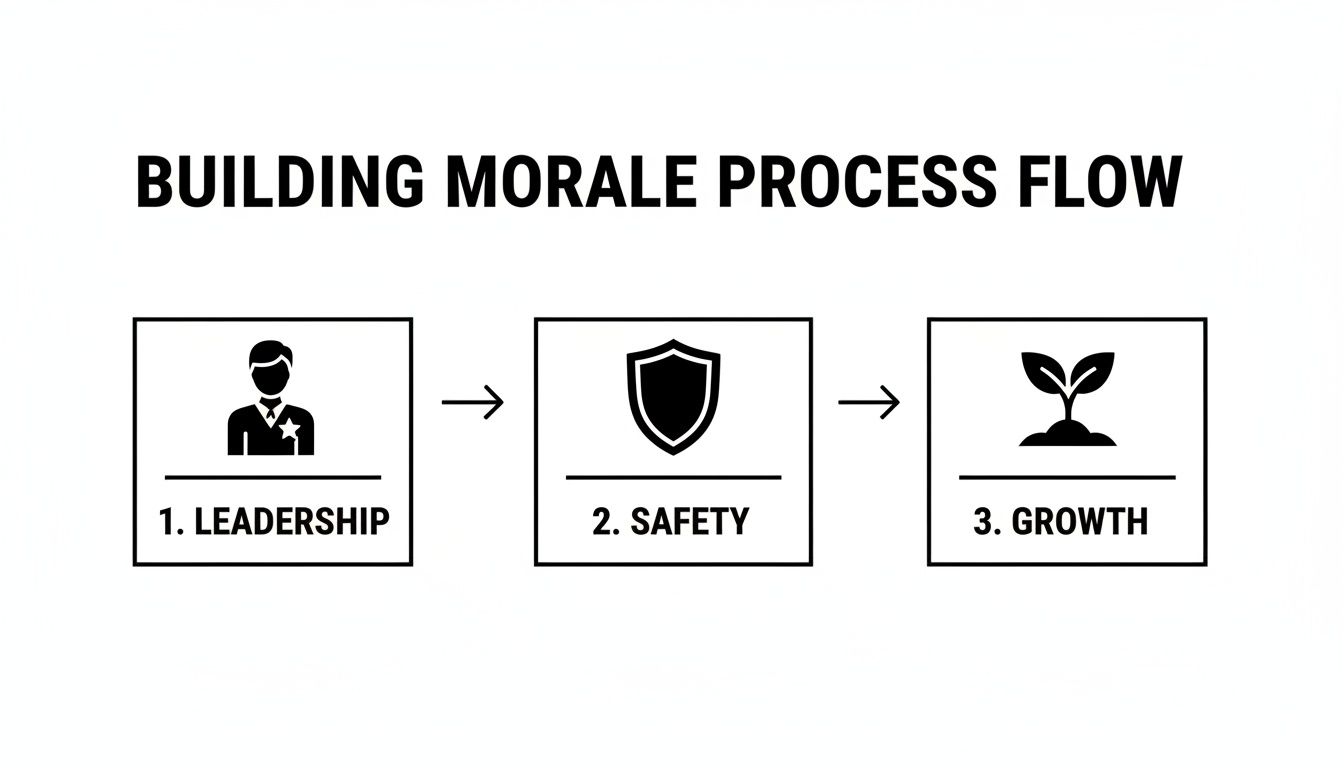
As you can see, strong morale isn't built on a single initiative. It’s the outcome of a supportive, ongoing process.
✦Practical Tools for Measuring Morale
Combining different feedback methods gives you the best of both worlds: hard data and the human stories behind the numbers. Here are three effective ways to do it:
Anonymous Pulse Surveys: These are quick, frequent check-ins—think weekly or bi-weekly—with just a handful of questions. They're fantastic for spotting trends over time and getting honest, in-the-moment feedback on specific issues. To get started, you can adapt a solid staff engagement survey template to fit your needs.
Qualitative One-on-One Feedback: Nothing replaces a good conversation. Regular check-ins are where you’ll uncover the nuances that surveys can miss. Train your managers to ask open-ended questions like, "What’s one thing we could change to make your work life better?"
'Stay' Interviews: Why wait for an exit interview to find out what went wrong? Be proactive. Sit down with your top performers and ask them what keeps them here. Find out what they love about their job and, just as importantly, what might tempt them to look elsewhere. Their answers give you a clear roadmap for keeping your best people.
The key is turning all this data into action. When employees see that their feedback leads to real change, you show them their voices matter. For a deeper dive, check out our guide on how to measure employee engagement.
How to Boost Morale with Events That Actually Happen
Getting the team together is one of the best ways to lift spirits. Shared experiences—whether it's a virtual escape room or an in-person lunch—build real connections. But let's be honest: for any company that uses Slack and Google Calendar, planning these events can be a nightmare.
The logistical headaches, especially with remote or hybrid teams, often kill the good intentions. Suddenly, a great idea to boost morale turns into a stressful chore for whoever is stuck organizing it.
All that back-and-forth over email, chasing down RSVPs, and manually adding things to calendars creates so much friction. The positive vibe is gone before the event even starts. If your team lives in Slack and Google Calendar, you know this pain all too well.
✦A Simple Fix for Teams on Slack and Google Calendar
This is exactly why a tool like Be There is so handy and useful. It’s an event planner built to work right inside Slack, so it fits perfectly into your team's existing routine. Instead of forcing everyone to learn another new app, it meets them where they already collaborate.
This seamless integration makes organizing anything from a quick coffee chat to a full-blown team-building day feel effortless. You can create, publish, and manage your company events without ever having to leave the familiar environment of Slack.
Just look at how simple it is to create an event right from your workspace.
The interface is clean and intuitive. Organizers can plug in the details in a familiar environment, and with just a few clicks, the event is out there, complete with automatic Google Calendar invites.
This streamlined process gets rid of the usual chaos. It actually makes it more likely that managers will plan the very activities that are proven to improve morale.
By removing the friction from event planning, you empower managers to create more frequent, high-impact moments of connection. These are the small, consistent efforts that genuinely lift team spirits over the long term.
With automated reminders and a one-click RSVP system, Be There boosts participation and keeps everyone in the loop. The tool does all the annoying follow-up for you.
Here’s a quick rundown of how it helps:
- Plan Everything in One Place: From the initial idea to the final reminder, it all happens in Slack. No more scattered information.
- Get More People to Show Up: Automatic Google Calendar invites and Slack reminders mean people won't miss out because they lost an email or forgot to add it to their calendar.
- Effortless RSVPs: Your team can RSVP with a single click. You get an accurate headcount without having to hound people for answers.
When you simplify the process, you can stop worrying about coordination and start focusing on creating great experiences. If you need some inspiration, check out these fun company fun event ideas. The right tool lets you focus on what really matters: bringing people together and building a better workplace.
Your Action Plan for Improving Team Morale
Knowing what morale is and spotting the warning signs is one thing. Actually doing something about it? That’s where real change begins. This isn't about grand, sweeping gestures; it's about taking small, consistent steps that build trust and make people feel valued.
Here’s a straightforward plan with actionable ideas that both team leads and HR can start using today. At its heart, this plan is all about understanding how to improve employee engagement and creating a place where people genuinely want to be.
✦Communication And Recognition
Let's start with the basics: keeping people in the loop and saying "thank you." When employees feel informed and appreciated, their sense of belonging skyrockets.
- Create a
#winschannel in Slack or Teams. This makes it incredibly easy for anyone to give a shout-out for great work, fostering a culture of peer-to-peer recognition. - Hold regular "Ask Me Anything" (AMA) sessions with leadership. These forums are fantastic for building trust and giving everyone a clear picture of where the company is headed.
- Launch a simple, consistent recognition program. It doesn't have to be complicated. Acknowledging a job well done in a team meeting or with a small, timely bonus can make a world of difference.
✦Well-being And Growth
Next up is showing your team you’re invested in them as people, not just as employees. Preventing burnout and supporting professional growth are absolutely essential for maintaining high morale over the long haul.
Morale isn't just about fun events; it's about creating a sustainable work environment where people feel secure, supported, and see a clear future for themselves within the company.
Here’s how to put that into practice:
- Block out one hour of "no-meeting" focus time for your team each day. This gives everyone a chance to do deep, uninterrupted work without constant pings and context switching.
- Encourage managers to have at least one career development conversation with each team member per quarter. This shows you care about their future, not just their output this week.
- Offer a small wellness stipend. Let employees use it for whatever helps them recharge, whether it's a gym membership, a meditation app, or a new pair of running shoes.
Putting these ideas into motion consistently is how you build a workplace with genuinely high morale. These small, deliberate actions create a powerful ripple effect, leading to a team that's more connected, motivated, and successful.
✦Quick-Start Morale Boosting Checklist
Feeling overwhelmed? Don't be. You don't have to tackle everything at once. This checklist breaks down the first steps you can take right now to make a tangible difference.
| Area of Focus | Action Item for Team Leads | Action Item for HR |
|---|---|---|
| Communication | Start your next team meeting by openly sharing a project update and asking for questions. | Send a company-wide update clarifying a key strategic goal for the quarter. |
| Recognition | Publicly praise a team member for a specific contribution in your team's chat channel. | Launch a simple "Nominate a Colleague" form for peer-to-peer appreciation. |
| Well-being | Announce a one-hour "no-meeting" block for your team for the rest of the week. | Share a curated list of mental health resources and apps with all employees. |
| Growth | Schedule a 15-minute chat with one team member this week to discuss their career goals. | Review and simplify the process for employees to request training or development funds. |
Start with just one or two items from this list. The key is to start somewhere. Consistent, small improvements are what build a truly positive and resilient work environment over time.
Common Questions About Employee Morale
When leaders start digging into the idea of employee morale, a few key questions almost always pop up. Let's tackle them head-on, because getting clear answers is the first step to making real improvements.
✦What's the Difference Between Morale and Engagement?
It’s easy to mix these two up, but they're definitely not the same thing. Think of it like this: morale is the emotional weather report for your team. It’s the collective feeling in the air—the optimism, the confidence, the general mood.
Engagement, on the other hand, is what people do because of that weather. It's the action. When the forecast is sunny (high morale), people are much more likely to step outside and give it their all (high engagement). High morale sets the stage for high engagement, but they aren't interchangeable.
✦How Often Should We Be Checking In on Team Morale?
That old-school annual survey just doesn't cut it anymore. A lot can happen in a year, and waiting that long means you're always reacting to old news. To get a real-time read on how your team is doing, you need to check in more often.
- Quick Pulse Surveys: A short, two-or-three-question survey sent out weekly or every other week is a fantastic way to spot dips and trends before they snowball into bigger problems.
- One-on-One Meetings: Managers should make morale a regular, casual topic in their check-ins. This creates a safe space for people to share honest feedback without it feeling like a formal review.
✦Can We Actually Improve Morale on a Tight Budget?
Absolutely. In fact, some of the most powerful morale boosters don't cost a dime.
Things like authentic recognition, clear and honest communication, and showing genuine trust in your team have a massive impact but are completely free. You can create a dedicated #wins channel in Slack for peer-to-peer shoutouts or have a senior leader host a quick "Ask Me Anything" session. These simple acts build meaningful connections, and that’s your most valuable—and affordable—tool for lifting spirits.
Ready to boost morale with team events that people will actually look forward to? Be There is the first event planner built right into Slack, making it incredibly easy to organize everything from virtual coffee chats to team lunches. For companies that run on Slack and Google Calendar, it removes all the planning friction so you can focus on what matters: building connections.
Share this post

Planning your internal events has never been easier!
No more scheduling headaches—our Slack-connected web app keeps things simple. Less email, more fun! 🚀
 Prefer a quick walkthrough?