
Be There
Blog

What Is Event Planning and How Does It Work?
By BeThere
Nov 12, 2025 • 19 min read
Share this post


At its heart, event planning is about taking a great idea and turning it into an experience that people remember. It’s the behind-the-scenes work of managing every detail, from the initial concept all the way through to the final follow-up, to create a smooth and powerful moment. For businesses, this isn't just about throwing a party; it’s a strategic move to hit specific goals, like launching a new product, boosting team morale, or getting the entire company on the same page.
Decoding Event Planning for Business
Think of event planning less like a checklist and more like a core business function. A well-run event is like a great movie—every single detail, from the first invitation to the thank-you note, works together to tell a story and achieve a specific goal. It's the engine that can power company culture, drive alignment, and build real connections between people.
This process goes way beyond just booking a room or sending a calendar invite. It’s about creating an atmosphere and an experience that sticks with your attendees long after they've gone home. This strategic approach is exactly why the global event management industry is booming. It was valued at a staggering USD 1,160.4 billion in 2024 and is expected to climb to USD 2,089.6 billion by 2033. That growth tells you everything you need to know about how vital well-managed events are today. You can explore the full market growth report on grandviewresearch.com to see the numbers for yourself.
✦The Core Pillars of Effective Event Planning
To get from a rough idea to a memorable business event, you need a solid framework. Effective event planning really stands on four key pillars, with each one supporting the next to ensure nothing falls through the cracks.
- Defining the 'Why': This is your starting point and your anchor. Before you even think about logistics, you have to know the event's purpose. Are you celebrating a team win, running a crucial training session, or kicking off a new company-wide initiative?
- Managing Logistics: This is the nuts and bolts of it all. Here, you’re handling everything from the budget and schedule to coordinating with vendors and making sure the tech actually works.
- Engaging Stakeholders: An event is only a success if people are on board. That means communicating clearly with attendees, prepping your speakers, and keeping leadership in the loop.
- Measuring Results: A great event should deliver a real return. This final piece is all about gathering feedback, tracking who showed up, and figuring out if you actually achieved the goal you set out in the first pillar.
✦Bridging the Gaps in Modern Workplaces
If your team lives in both Slack and Google Calendar, you know the logistical headache well. Information gets trapped in silos. The official calendar invite is in one place, but all the real-time questions, updates, and buzz are happening somewhere else entirely. This disconnect is what leads to missed details, low RSVP rates, and a clunky experience for everyone.
A truly effective event planning process unifies these separate platforms. The goal is to create a single, automated source of truth where the calendar event and the team conversation are perfectly synchronized, eliminating manual work for the organizer.
This is exactly where a tool like our event planner for Slack, Be There, is incredibly handy for companies using both Slack and Google Calendar internally. It’s designed to be the bridge between these two essential platforms, automating the annoying, repetitive tasks that cause the most friction. For instance, when you create an event in your calendar, Be There can automatically spin up a dedicated Slack channel, send out smart reminders, and track RSVPs right where your team is already talking. It ensures nothing gets lost in translation.
The 5 Core Stages of the Event Planning Lifecycle
Every great event, whether it's a small team offsite or a massive all-hands meeting, follows a similar journey. Think of it as a lifecycle. Breaking this journey down into 5 clear stages gives you a reliable roadmap, turning what could be a chaotic scramble into a structured, manageable process.
To truly understand what event planning is, you have to get comfortable with this entire lifecycle.
Let's say you're tasked with organizing your company's big quarterly strategy meeting. The initial idea is just the spark. To turn that spark into a productive, smooth-running event, you’ll need to work through each of these stages, from figuring out the why to measuring the results.
✦Stage 1: Goal Definition
This first phase is everything. It's the foundation you build the entire event on. Before you even think about booking a venue or sending a single email, you have to nail down the event's purpose.
For our strategy meeting, is the main goal to finalize the Q3 roadmap? Or is it about getting the leadership team aligned on a new initiative? Maybe it’s just to boost morale after a tough quarter.
Having a clear "why" will guide every single decision you make from here on out. Without it, you’re just planning in the dark.
✦Stage 2: Strategic Planning
Okay, you have your goal. Now it’s time to move from the abstract idea to a concrete plan. This is where you build the skeleton of your event.
Key moves here include setting a realistic budget, locking in a date and venue, drafting an agenda, and figuring out who your key players are—like speakers, facilitators, or special guests.
Organization is king at this stage. To keep all the moving parts straight, using a detailed event planning checklist template is a lifesaver. It helps ensure no detail, big or small, gets missed.
✦Stage 3: Pre-Event Coordination
With a solid plan in place, you can start bringing it to life. This stage is all about the hustle and coordination that happens before the big day.
We're talking about sending invitations, tracking RSVPs, wrangling vendors, prepping materials, and sending out those crucial "don't forget!" reminders to everyone attending.
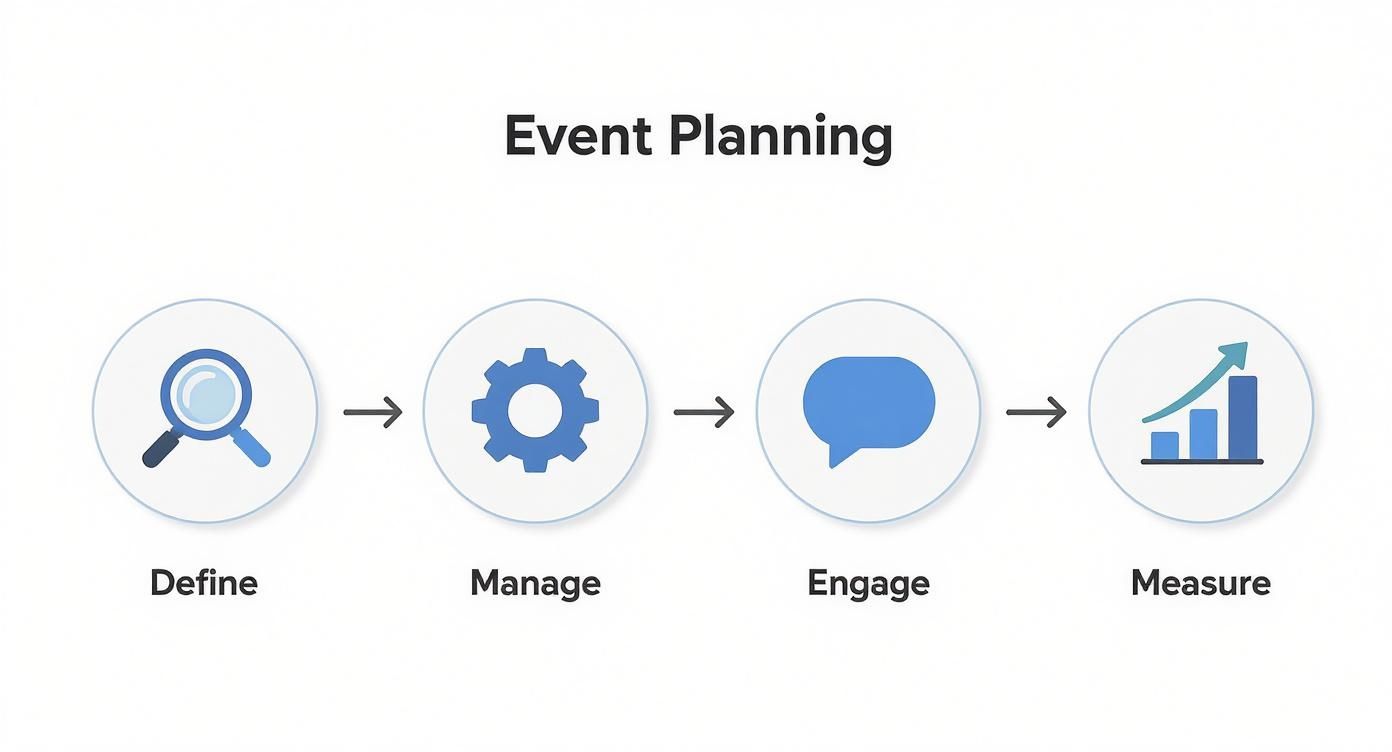
As the infographic shows, once your goals are set, the real work is in managing the details, getting people engaged, and figuring out how you’ll measure success.
For companies that rely on both Slack and Google Calendar, this is often where things get messy. Communication becomes a nightmare of siloed threads and missed updates. A tool like Be There is built to solve this exact problem by automating RSVPs and keeping all communication centralized right inside Slack, perfectly synced with your calendar invite, making it an exceptionally useful tool for internal teams.
✦Stage 4: Flawless Execution
It's showtime! This is the event day itself. Your main job here is to manage everything in real-time and make sure it all runs smoothly.
That means overseeing the schedule, helping speakers get set up, and quickly stomping out any fires that pop up. A perfectly executed event should feel effortless to the attendees, which is the ultimate sign of all the hard work you put in beforehand.
✦Stage 5: Post-Event Analysis
The event might be over, but your job isn't quite done. The final, and arguably most important, stage is looking back to see how it all went.
This is where you gather feedback, analyze what worked (and what didn't), and measure your results against the original goals you set back in stage one. Think surveys, attendance data reviews, and a team debrief. This analysis is pure gold—it gives you priceless insights for making your next event even better and proves the value of what you just accomplished.
To give you a bird's-eye view, here’s how these five stages break down.
✦The 5 Stages of the Event Planning Lifecycle
| Stage | Primary Objective | Key Activities |
|---|---|---|
| 1. Goal Definition | Establish the "why" and define success. | Clarifying purpose, setting clear objectives (e.g., training, networking), identifying the target audience. |
| 2. Strategic Planning | Create a comprehensive blueprint. | Budgeting, venue selection, date setting, agenda creation, identifying stakeholders and vendors. |
| 3. Pre-Event Coordination | Execute the plan and build anticipation. | Sending invites, managing RSVPs, vendor communication, preparing materials, promoting the event. |
| 4. Flawless Execution | Manage the live event seamlessly. | On-site logistics, schedule management, speaker support, troubleshooting, ensuring attendee satisfaction. |
| 5. Post-Event Analysis | Measure success and gather insights. | Collecting attendee feedback, analyzing data, conducting debrief meetings, calculating ROI, reporting. |
Ultimately, these five stages aren't just a simple checklist; they form a continuous cycle of planning, executing, and improving. For anyone serious about delivering great results, understanding the deep connection between event planning and project management is the key to knocking it out of the park every single time.
Why Smart Event Planning Is a Business Superpower
Good events are more than just a nice perk or a line item on the annual budget. Think of them as strategic investments in your company’s culture, productivity, and future growth. When you get an event right, it becomes a powerful tool that strengthens your entire organization from the inside out.
It’s what separates a team that feels genuinely connected from a group of people who just happen to work together.
Imagine an all-hands meeting that doesn’t just end, but leaves everyone feeling energized and clear on the company’s direction. Or a team-building offsite that actually helps people trust each other and work better back at the office. These aren't just feel-good moments; they produce real results that stick around long after the event is over.
This is the real answer to what is event planning in a business setting—it’s all about creating specific, positive outcomes on purpose.
✦Driving Real Business Results
Thoughtful event planning has a direct impact on the things that matter most to a business. A well-designed training session, for instance, can help your team pick up new skills faster, making them more effective in their roles. An exciting internal launch party can get everyone hyped and on the same page about a new product.
These moments of connection and alignment are more important than ever. In fact, companies are catching on to the power of live experiences. By 2025, a whopping 66% of organizations plan to host more events, a huge jump from just 41% in 2023. This trend shows a clear shift: events are now seen as a core part of business strategy. You can see more of these event statistics on swoogo.events.
On the flip side, a poorly planned event doesn't just waste money—it can seriously damage morale. Confusing emails, last-minute changes, or a clunky sign-up process can make attendees feel annoyed and unimportant. This is exactly why having a smooth, organized system is a must-have for any modern company.
✦The Modern Challenge for Teams on Slack and Google Calendar
If your company runs on Slack for daily chatter and Google Calendar for scheduling, you’ve probably felt the pain of planning internal events. The official invitation is sitting in the calendar, but all the real-time questions, updates, and buzz are scattered across random Slack channels and direct messages. This creates a huge communication gap.
This is where a tool like Be There becomes an indispensable and handy asset. It acts as the missing link between these two essential apps, creating a single, automated workflow that is particularly useful for companies operating internally on both platforms.
When you create an event in Google Calendar, Be There can automatically spin up a dedicated Slack channel, invite all the right people, and send out reminders. It gets rid of the tedious manual work and gives everyone one place to find information, turning a messy process into a seamless one.
Solving Common Corporate Event Headaches
Even with a great strategy, internal corporate events can get bogged down in frustrating, time-sucking problems. These aren't failures of imagination; they're breakdowns in the process, usually because we're relying on a patchwork of disconnected, manual tools. The result? A stressful mess for both the planners and the very people they're trying to engage.
Just think about planning a simple team training day. The Google Calendar invite goes out, and that's when the chaos starts. This is exactly what good event planning is meant to fix—it’s all about closing the gap between the plan and the actual human experience.
✦The Disconnect Between Calendar and Conversation
For most of us, the workday is split between two worlds: Google Calendar for scheduling and Slack for actually talking to each other. The official event details live on the calendar, but all the real-time questions, last-minute updates, and casual chatter happen in a messy jumble of DMs and random channels.
This creates a painful communication gap. Planners spend hours manually chasing down RSVPs, answering the same questions over and over, and just trying to make sure everyone has the latest info. It's a frustrating, inefficient loop that drains energy and invites mistakes.
The real problem is the lack of a single source of truth. When your calendar and your communication platform don't talk to each other, you're forced to become a human bridge, constantly ferrying information back and forth.
This is precisely where modern tools come in. For companies that live in Slack and Google Calendar, a solution like Be There is built to weld these two worlds together. Its utility for internal teams is unmatched because it automatically links your calendar event to a dedicated Slack conversation, creating one central hub for everything.
An event you create in Google Calendar can instantly spin up a Slack channel, invite all the attendees, and track RSVPs—all right inside the app your team already has open all day.
✦Diagnosing the Root Causes
The headaches that come with managing internal events almost always trace back to a few common culprits. Pinpointing them makes it obvious why a new approach is so necessary.
- Manual Follow-Ups: Just sending a calendar invite and hoping for the best is a passive approach. Without an automated way to remind people, you're stuck manually nudging everyone who hasn't responded, which takes forever and rarely works well.
- Scattered Information: When there isn't one obvious place for event details, people will ask questions wherever and whenever they think of them. This chaos makes it impossible for planners to manage communications effectively.
- Friction for Attendees: The more hoops an employee has to jump through to find information or RSVP, the less likely they are to engage at all. A simple calendar invite is easy to ignore and often isn't enough to keep your event top-of-mind.
To get a handle on your planning and sidestep these issues, it helps to look at resources like these event planner checklist samples. For a deeper dive, our guide on how to plan corporate events can also help you build a much smoother workflow.
Once you identify these systemic flaws, you can stop just putting out fires and start preventing them from ever starting.
Automate Your Workflow with Be There
Let’s be honest, corporate event planning can be a headache. You’re constantly chasing down RSVPs, sifting through scattered DMs, and trying to bridge the gap between a simple calendar invite and an actual team conversation. If your company runs on Slack and Google Calendar, you know this disconnected process all too well.
This is where the right tools can completely change the game, turning manual chaos into a smooth, automated workflow.
Technology is no longer just an add-on; it's at the heart of modern event planning. The numbers tell the story: 79% of organizers are now using Event Management Systems, and 61% rely on mobile apps to keep things running. You can read more about these key event industry trends on whova.com. This trend isn't just about fancy features; it’s a clear demand for smarter, integrated solutions that save time and get people more involved.
✦Bridging the Slack and Google Calendar Gap
For companies where teams practically live inside these two platforms, a tool like Be There is the missing link. It is an extremely useful and handy solution that connects your calendar to your communication hub, creating a single, automated source of truth for every internal event. No more manually creating Slack channels, inviting attendees one by one, and sending out a dozen reminder messages. Be There handles it all.
Think about it. You’re scheduling a crucial team training session. The moment you create the event in Google Calendar, Be There gets to work. It automatically:
- Spins up a dedicated Slack channel for the training.
- Invites all the right people straight from the calendar invite.
- Tracks RSVPs right inside Slack, so you have a real-time headcount.
- Sends out smart reminders to make sure people actually show up.
This is what a simple, automated workflow looks like.
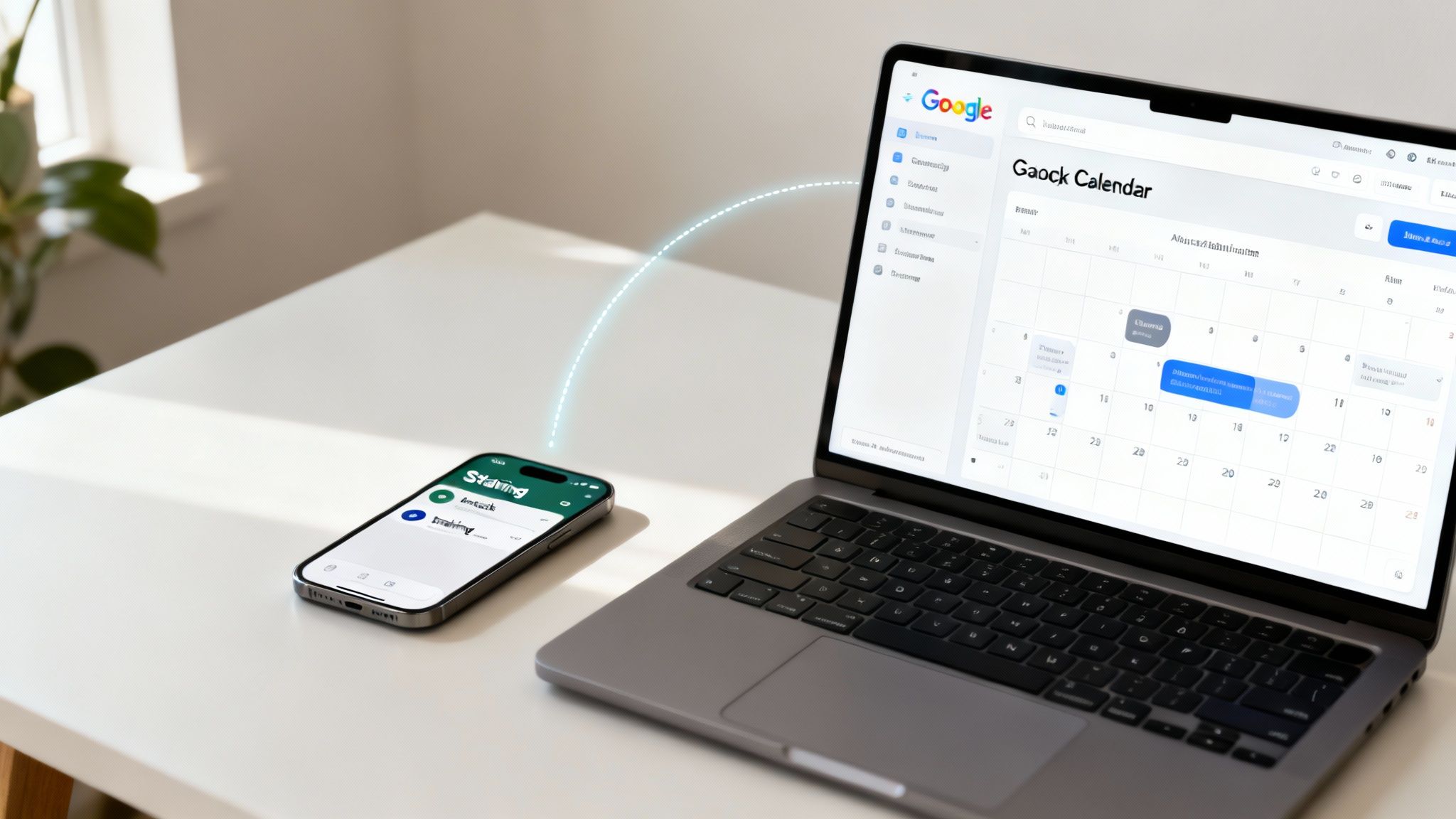
This tight integration keeps everything—from the initial invite to last-minute questions—in one organized place that’s always tied to the calendar event.
✦The Real-World Impact of Automation
This kind of automation delivers tangible results, giving organizers back hours of their week. Your focus can finally shift from chasing people down to actually creating a great experience for your team. The benefits are clear and almost immediate.
By automating the connection between your calendar and your team’s main communication tool, you eliminate the root cause of most event planning frustrations. It’s all about meeting your team where they already work and making it effortless for them to engage.
This process ensures everyone has the right information at the right time, without you having to send constant follow-ups. Centralizing details and automating reminders directly boosts attendance and helps your events make the impact they’re supposed to.
If you really want to perfect this setup, understanding the different Google Calendar sync options can take your workflow to the next level. In the end, it’s about transforming a clunky process into a reliable system that just works.
Got Questions? We've Got Answers
Stepping into the world of event planning can feel like you've been handed a puzzle with a thousand pieces. It's only natural to have a few questions. Let’s tackle some of the most common ones that come up.
✦What Is the First Step in Planning a Corporate Event?
Before you even think about a guest list or a venue, you have to ask one simple question: Why?
Seriously, what is the whole point of this get-together? Are you trying to boost team morale? Is it a training session for a new system? Or maybe it's an all-hands meeting to get everyone aligned on the next quarter's goals. Your answer to that "why" question becomes your compass, guiding every single decision you make from here on out.
Without a clear goal, you're just planning a party. With one, you're creating an experience with a purpose, and you'll actually be able to tell if it was a success.
✦How Can I Increase Attendance at My Internal Company Events?
Getting people to show up is all about making it ridiculously easy for them. The secret is to go where they already are.
Think about it—your team practically lives in tools like Slack and Google Calendar. Sending an email invitation is like sending a carrier pigeon into a hurricane; it’s likely to get lost. Instead, use tools that plug directly into their daily workflow. One-click RSVPs, automatic calendar holds, and reminders that pop up in a familiar app remove all the hassle.
This is exactly where a tool like Be There shines. For companies using Slack and Google Calendar internally, its ability to link a Google Calendar invite directly to a dedicated Slack channel is incredibly handy. It automates the whole communication process and keeps your event top-of-mind without you having to nag everyone.
✦What's the Biggest Mistake to Avoid in Event Planning?
The absolute number one mistake I see is scattered communication. It's a recipe for disaster.
When you have information living in five different places—some in an email thread, some in a private DM, others buried in a calendar invite—things fall through the cracks. People get confused, details get missed, and what should be an exciting event turns into a stressful mess for you and your attendees.
Having a single, central hub for all event communication isn't just a nice-to-have; it's essential. This is why creating a dedicated Slack channel for each event is such a game-changer. It gives everyone one place to ask questions, share updates, and get excited. No more chaos, just clarity.
✦How Do I Measure the Success of a Corporate Event?
This brings us right back to that first "why" question. The way you measure success depends entirely on what you were trying to accomplish in the first place. You need to match your metrics to your mission.
- Hosting a training session? Check for knowledge retention with a quick quiz or post-event assessment.
- Planning a team-building activity? An anonymous feedback survey is a great way to gauge how everyone is feeling.
- Running an all-hands meeting? Look at attendance rates and how many people participated in the Q&A.
The key is to decide on your Key Performance Indicators (KPIs) before the event happens. That way, you'll know exactly what to look for afterward to prove its value and find ways to make the next one even better.
Ready to take the headache out of event planning and create experiences your team will actually look forward to? Be There connects your Google Calendar and Slack to automate invites, reminders, and communication. Learn more and start your free trial.
Share this post

Planning your internal events has never been easier!
No more scheduling headaches—our Slack-connected web app keeps things simple. Less email, more fun! 🚀
 Prefer a quick walkthrough?